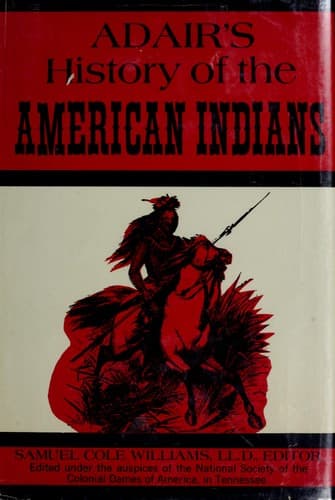
Adair's History of the American IndiansAdair, James
History
Adair's History of the American Indians
Adair, James
Indians -- Origin; Indians of North America -- Southern States
Though the Indians do not use salt in their first-fruit-oblation till
the fourth day; it is not to be doubted but they formerly did. They
reckon they cannot observe the annual expiation of sins, without bear’s
oil, both to mix with that yearly offering, and to eat with the new
sanctified fruits; and some years they have a great deal of trouble in
killing a sufficient quantity of bears for the use of this religious
solemnity, and their other sacred rites for the approaching year; for at
such seasons they are hard to be found, and quite lean. The traders
commonly supply themselves with plenty of this oil from winter to
winter; but the Indians are so prepossessed with a notion of the white
people being all impure and accursed, that they deem their oil as
polluting on those sacred occasions, as Josephus tells us the Jews
reckoned that of the Greeks. An Indian warrior will not light his pipe
at a white man’s fire if he suspects any unsanctified food has been
dressed at it in the new year. And in the time of the new-ripened
fruits, their religious men carry a flint, punk, and steel, when they
visit us, for fear of polluting themselves by lighting their pipes at
our supposed _Loak ookproose_, “accursed fire,” and spoiling the power
of their holy things. The polluted would, if known, be infallibly
anathamatized, and expelled from the temple, with the women, who are
suspected of gratifying their vicious taste. During the eight days
festival, they are forbidden even to touch the skin of a female child:
if they are detected, either in cohabiting with, or laying their hand on
any of their own wives, in that sacred interval, they are stripped
naked, and the offender is universally deemed so atrocious a criminal,
that he lives afterwards a miserable life. Some have shot themselves
dead, rather than stand the shame, and the long year’s continual
reproaches cast upon them, for every mischance that befalls any of their
people, or the ensuing harvest,—a necessary effect of the divine anger,
they say, for such a crying sin of pollution. An instance of this kind I
heard happened some years ago in _Talàse_, a town of the Muskohge, seven
miles above the Alebáma garrison.
Public-domain text, read in full here on John Shaqi.
Reviews
Reviews
No reviews yet
Be the first to share your thoughts on this work.
Elsewhere in the archive
Join the Discussion
Join the discussion
Sign in to leave a comment or review.
Sign InorCreate an account