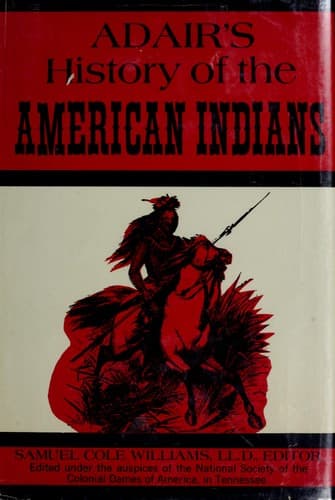
Adair's History of the American IndiansAdair, James
History
Adair's History of the American Indians
Adair, James
Indians -- Origin; Indians of North America -- Southern States
The Israelites had CITIES OF REFUGE, or places of safety, for those who
killed a person unawares, and without design; to shelter them from the
blood-thirsty relations of the deceased, or the revenger of blood, who
always pursued or watched the unfortunate person, like a ravenous wolf:
but after the death of the high-priest the man-slayer could safely
return home, and nobody durst molest him.
According to the same particular divine law of mercy, each of these
Indian nations have either a house or town of refuge, which is a sure
asylum to protect a man-slayer, or the unfortunate captive, if they can
once enter into it.[59] The Cheerake, though now exceedingly corrupt,
still observe that law so inviolably, as to allow their beloved town the
privilege of protecting a wilful murtherer: but they seldom allow him to
return home afterwards in safety—they will revenge blood for blood,
unless in some very particular case when the eldest can redeem. However,
if he should accept of the price of blood to wipe away its stains, and
dry up the tears of the rest of the nearest kindred of the deceased, it
is generally productive of future ills; either when they are drinking
spirituous liquors, or dancing their enthusiastic war dances, a tomohawk
is likely to be sunk into the head of some of his relations.
Formerly, when one of the Cheerake murdered an English trader he
immediately ran off for the town of refuge; but as soon as he got in
view of it, the inhabitants discovered him by the close pursuit of the
shrill war-whoo-whoop; and for fear of irritating the English, they
instantly answered the war cry, ran to arms, intercepted, and drove him
off into Tennàse river (where he escaped, though mortally wounded) lest
he should have entered the reputed holy ground, and thus it had been
stained with the blood of their friend; or he had obtained sanctuary to
the danger of the community, and the foreign contempt of their sacred
altars. {158}
Public-domain text, read in full here on John Shaqi.
Reviews
Reviews
No reviews yet
Be the first to share your thoughts on this work.
Elsewhere in the archive
Join the Discussion
Join the discussion
Sign in to leave a comment or review.
Sign InorCreate an account