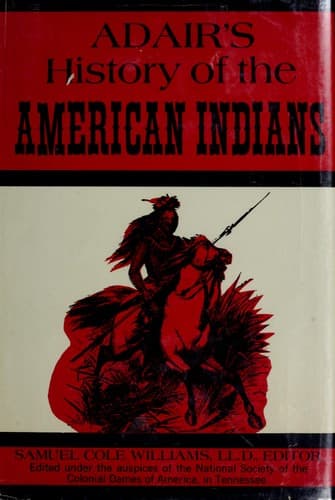
Adair's History of the American IndiansAdair, James
History
Adair's History of the American Indians
Adair, James
Indians -- Origin; Indians of North America -- Southern States
When he comes to finish his bloody sacrifices, he orders the young men
and women into two rows, directly facing each other, to dance and sing
by the drum, in praise of the feast and the god; and he sets the oldest
and the greatest men to answer the song, and dance around them, in a
great circle. This with a little alteration, resembles the custom of the
northern Indians. He says, that all the inhabitants of the city and
country came to this great feast,—that it was deemed sacrilegious in any
person to eat of the honeyed paste, on this great festival-day, or to
drink water, till the afternoon; and that they earnestly advised those,
who had the use of reason, to abstain from water till the afternoon, and
carefully concealed it from the children during the time of this
ceremony. But, at the end of the feast, he makes the priests and
ancients of the temple to break the image of paste and consecrated
rolls, into many pieces, and give them to the people by the way of
sacrament, according to the strictest rules of order, from the greatest
and eldest, to the youngest and least, men, women and children: and he
says, they received it with bitter tears, great reverence, and a very
awful fear, with other strong signs of devotion, saying at the same
time,—“they did not[94] eat the flesh and bones of their God.” He adds,
that they who had sick people at home, demanded a piece of the said
paste, and carried and gave it to them, with the most profound reverence
and awful adoration; that all who partook of this propitiating
sacrifice, were obliged to give a part of the feed of Maiz, of which the
idol was made; and then at the end of the solemnity, a priest of high
authority preached to {207} the people on their laws and ceremonies,
with a commanding voice, and expressive gestures; and thus dismissed the
assembly.
Well may Acosta blame the devil in the manner he does, for introducing
among the Mexicans, so near a resemblance of the popish superstitions
and idolatry. But whether shall we blame or pity this writer, for
obscuring the truth with a confused heap of falshoods? The above is
however a curious Spanish picture of the Mexican passover, or annual
expiation of sins, and of their second passover in favour of their sick
people,—and of paying their tythes,—according to similar customs of our
North-American Indians. We are now sufficiently informed of the rites
and customs of the remote, and uncorrupt South-Americans, by the
Missisippi Indians, who have a communication with them, both in peace
and war.
Public-domain text, read in full here on John Shaqi.
Reviews
Reviews
No reviews yet
Be the first to share your thoughts on this work.
Elsewhere in the archive
Join the Discussion
Join the discussion
Sign in to leave a comment or review.
Sign InorCreate an account