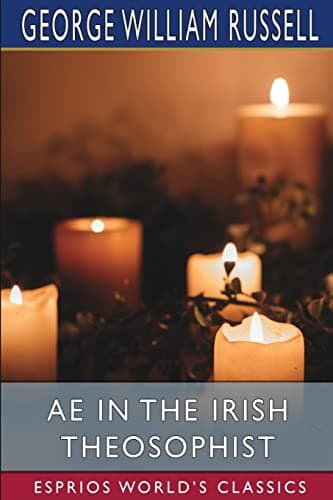
AE in the Irish TheosophistRussell, George William
Religion
AE in the Irish Theosophist
Russell, George William
Theosophy
age our very sins become negative: we are still pleased if a voice
praises us, but we grow lethargic in enterprises where the spur
to activity is fame or the acclamation of men. At some point in
the past we struggled mightily for the sweet incense which men
offer to a towering personality: but the infinite is for ever
within man: we sighed for other worlds and found that to be saluted
as victor by men did not mean acceptance by the gods.
But the placing of an invisible finger upon our lips when we would
speak, the heart-throb of warning where we would love, that we
grow contemptuous of the prizes of life, does not mean that the
spirit has ceased from its labours, that the high-built beauty of
the spheres is to topple mistily into chaos, as a mighty temple
in the desert sinks into the sand, watched only by a few barbarians
too feeble to renew its ancient pomp and the ritual of its once
shining congregations. Before we, who were the bright children
of the dawn, may return as the twilight race into the silence,
our purpose must be achieved, we have to assume mastery over that
nature which now overwhelms us, driving into the Fire-fold the
flocks of stars and wandering fires. Does it seem very vast and
far away? Do you sigh at the long, long time? Or does it appear
hopeless to you who perhaps return with trembling feet evening
after evening from a little labour? But it is back of all these
things that the renewal takes place, when love and grief are dead;
when they loosen their hold on the spirit and its sinks back into
itself, looking out on the pitiful plight of those who, like it,
are the weary inheritors of so great destinies: then a tenderness
which is the most profound quality of its being springs up like
the outraying of the dawn, and if in that mood it would plan or
execute it knows no weariness, for it is nourished from the First
Fountain. As for these feeble children of the once glorious spirits
of the dawn, only a vast hope can arouse them from so vast a despair,
for the fire will not invigorate them for the repetition of petty
deeds but only for the eternal enterprise, the purpose of the
immemorial battle waged through all the ages, the wars in heaven,
the conflict between Titan and Divinity, which were part of the
never-ending struggle of the human spirit to assert its supremacy
over nature. Brotherhood, the declaration of ideals and philosophies,
are but calls to the hosts, who lie crushed by this mountain nature
piled above them, to arise again, to unite, to storm the heavens
and sit on the seats of the mighty.
Public-domain text, read in full here on John Shaqi.
Reviews
Reviews
No reviews yet
Be the first to share your thoughts on this work.
Elsewhere in the archive
Join the Discussion
Join the discussion
Sign in to leave a comment or review.
Sign InorCreate an account