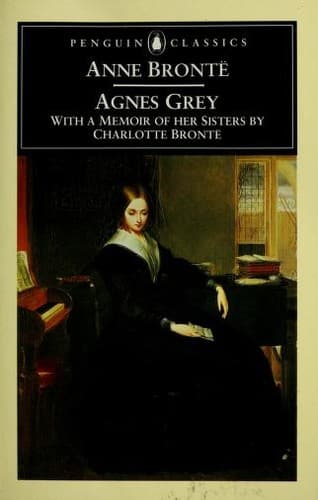
Autobiographical fiction; England -- Fiction; Feminist fiction; Governesses -- Fiction; Single women -- Fiction
We are naturally disposed to love what gives us pleasure, and what more
pleasing than a beautiful face—when we know no harm of the possessor at
least? A little girl loves her bird—Why? Because it lives and feels;
because it is helpless and harmless? A toad, likewise, lives and feels,
and is equally helpless and harmless; but though she would not hurt a
toad, she cannot love it like the bird, with its graceful form, soft
feathers, and bright, speaking eyes. If a woman is fair and amiable,
she is praised for both qualities, but especially the former, by the
bulk of mankind: if, on the other hand, she is disagreeable in person
and character, her plainness is commonly inveighed against as her
greatest crime, because, to common observers, it gives the greatest
offence; while, if she is plain and good, provided she is a person of
retired manners and secluded life, no one ever knows of her goodness,
except her immediate connections. Others, on the contrary, are disposed
to form unfavourable opinions of her mind, and disposition, if it be
but to excuse themselves for their instinctive dislike of one so
unfavoured by nature; and _vice versâ_ with her whose angel form
conceals a vicious heart, or sheds a false, deceitful charm over
defects and foibles that would not be tolerated in another. They that
have beauty, let them be thankful for it, and make a good use of it,
like any other talent; they that have it not, let them console
themselves, and do the best they can without it: certainly, though
liable to be over-estimated, it is a gift of God, and not to be
despised. Many will feel this who have felt that they could love, and
whose hearts tell them that they are worthy to be loved again; while
yet they are debarred, by the lack of this or some such seeming trifle,
from giving and receiving that happiness they seem almost made to feel
and to impart. As well might the humble glowworm despise that power of
giving light without which the roving fly might pass her and repass her
a thousand times, and never rest beside her: she might hear her winged
darling buzzing over and around her; he vainly seeking her, she longing
to be found, but with no power to make her presence known, no voice to
call him, no wings to follow his flight;—the fly must seek another
mate, the worm must live and die alone.
Such were some of my reflections about this period. I might go on
prosing more and more, I might dive much deeper, and disclose other
thoughts, propose questions the reader might be puzzled to answer, and
deduce arguments that might startle his prejudices, or, perhaps,
provoke his ridicule, because he could not comprehend them; but I
forbear.
Public-domain text, read in full here on John Shaqi.
Reviews
Reviews
No reviews yet
Be the first to share your thoughts on this work.
Elsewhere in the archive
Join the Discussion
Join the discussion
Sign in to leave a comment or review.
Sign InorCreate an account