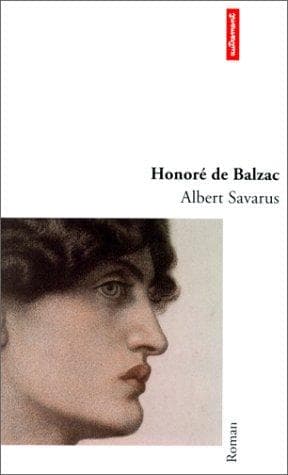
France -- Social life and customs -- 19th century -- Fiction; French fiction -- Translations into English
Francesca was quite of the Italian type, and such as imagination
supposes or pictures, or, if you will, dreams, that Italian women
are. What first struck Rodolphe was the grace and elegance of a figure
evidently powerful, though so slender as to appear fragile. An amber
paleness overspread her face, betraying sudden interest, but it did not
dim the voluptuous glance of her liquid eyes of velvety blackness.
A pair of hands as beautiful as ever a Greek sculptor added to the
polished arms of a statue grasped Rodolphe’s arm, and their whiteness
gleamed against his black coat. The rash Frenchman could but just
discern the long, oval shape of her face, and a melancholy mouth showing
brilliant teeth between the parted lips, full, fresh, and brightly
red. The exquisite lines of this face guaranteed to Francesca permanent
beauty; but what most struck Rodolphe was the adorable freedom, the
Italian frankness of this woman, wholly absorbed as she was in her pity
for him.
Francesca said a word to Gina, who gave Rodolphe her arm as far as the
Stopfers’ door, and fled like a swallow as soon as she had rung.
“These patriots do not play at killing!” said Rodolphe to himself as
he felt his sufferings when he found himself in his bed. “‘_Nel lago!’_
Gina would have pitched me into the lake with a stone tied to my neck.”
Next day he sent to Lucerne for the best surgeon there, and when he
came, enjoined on him absolute secrecy, giving him to understand that
his honor depended on it.
Leopold returned from his excursion on the day when his friend first got
out of bed. Rodolphe made up a story, and begged him to go to Lucerne
to fetch their luggage and letters. Leopold brought back the most
fatal, the most dreadful news: Rodolphe’s mother was dead. While the
two friends were on their way from Bale to Lucerne, the fatal letter,
written by Leopold’s father, had reached Lucerne the day they left for
Fluelen.
In spite of Leopold’s utmost precautions, Rodolphe fell ill of a nervous
fever. As soon as Leopold saw his friend out of danger, he set out
for France with a power of attorney, and Rodolphe could thus remain at
Gersau, the only place in the world where his grief could grow calmer.
The young Frenchman’s position, his despair, the circumstances which
made such a loss worse for him than for any other man, were known, and
secured him the pity and interest of every one in Gersau. Every morning
the pretended dumb girl came to see him and bring him news of her
mistress.
Public-domain text, read in full here on John Shaqi.
Reviews
Reviews
No reviews yet
Be the first to share your thoughts on this work.
Join the Discussion
Join the discussion
Sign in to leave a comment or review.
Sign InorCreate an account