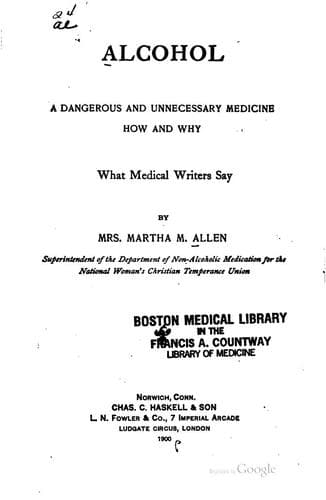
Alcohol: A Dangerous and Unnecessary Medicine, How and Why: What Medical Writers SayAllen, Martha Meir
Science
Alcohol: A Dangerous and Unnecessary Medicine, How and Why: What Medical Writers Say
Allen, Martha Meir
Alcohol -- Physiological effect; Temperance
"Every drug capable of producing an artificial exhilaration of
spirits, a pleasure which is not the result of the natural play
of the vital functions, is necessarily mischievous in its
tendencies, and its use is intemperance, whether its name be
alcohol, tobacco, opium, cocaine, coca, kola, hashish, Siberian
mushroom, caffeine, betel-nuts, mate or any other of the score
or more enslaving drugs known to pharmacology. As the result of
the depression which follows the unnatural elevation of
sensation resulting from the use of one of these drugs, the
second application finds the subject on a little lower level
than the first, so that an increased dose is necessary to
produce the same intensity of pleasure or the same degree of
artificial felicity as the first. The larger dose is followed by
still greater depression which demands a still larger dose as
its antidote, and thus there is started a series of
ever-increasing doses, and ever-increasing baneful
after-affects, which work the ultimate ruin of the drug victim.
All drugs which enslave are alike in this regard, however much
they may differ otherwise in their physiological effects.
Alcohol is universally recognized as only one member of a large
family of intoxicating drugs, each of which is capable of
producing specific functional and organic mischief, besides the
vital deterioration common to the use of so-called
felicity-producing drugs.
"Is it not evident, then, that in combating the use of alcohol
we are attacking only one member of a numerous family of enemies
to human life and happiness, every one of which must be
exterminated before the evil of intemperance will be up-rooted?"
Among the most popular drugs for self-prescription at the present time
are the coal-tar products. Of these Dr. N. S. Davis has said:--
"Only a few years since, the profession were taught to regard
the degree of pyrexia, or heat, as the chief element of danger
in all the acute general diseases. Consequently, to control the
pyrexia became the leading object of treatment; and whatever
would do this promptly, and at the same time allay pain and
promote rest, found favor at the bedside of the patient.
Public-domain text, read in full here on John Shaqi.
Reviews
Reviews
No reviews yet
Be the first to share your thoughts on this work.
Elsewhere in the archive
Join the Discussion
Join the discussion
Sign in to leave a comment or review.
Sign InorCreate an account