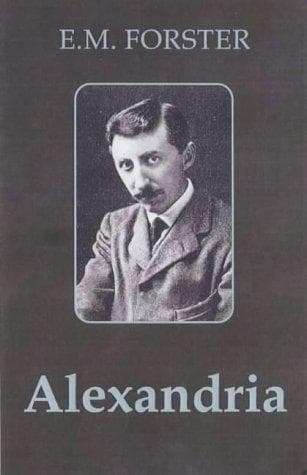
Alexandria: A History and a GuideForster, E. M. (Edward Morgan)
History
Alexandria: A History and a Guide
Forster, E. M. (Edward Morgan)
Alexandria (Egypt) -- Guidebooks; Alexandria (Egypt) -- History
The literature that grew up in the Mouseion had no lofty aims. It was
not interested in ultimate problems nor even in problems of behaviour,
and it attempted none of the higher problems of art. To be graceful or
pathetic or learned or amusing or indecent, and in any case loyal—this
sufficed it, so that though full of experiments it is quite devoid of
adventure. It developed when the heroic age of Greece was over, when
liberty was lost and possibly honour too. It was disillusioned, and we
may be glad that is was not embittered also. It had strength of a kind,
for it saw that out of the wreck of traditional hopes three good things
remained—namely the decorative surface of the universe, the delights of
study, and the delights of love, and that of these three the best was
love. Ancient Greece had also sung of love, but with restraint,
regarding it as one activity among many. The Alexandrians seldom sang of
anything else: their epigrams, their elegies and idylls, their one great
epic, all turn on the tender passion, and celebrate it in ways that
previous ages had never known, and that future ages were to know too
well. Darts and hearts, sighs and eyes, breasts and chests, all
originated in Alexandria and from the intercourse between Palace and
Mouseion—stale devices to-day, but then they were fresh.
Who sculptured Love and set him by the pool,
thinking with water such a fire to cool?[2]
runs a couplet ascribed to one of the early Librarians, and containing
in brief the characteristics of the school—decorative method,
mythological allusiveness, and the theme of love. Love as a cruel and
wanton boy flits through the literature of Alexandria as through the
thousands of terra cotta statuettes that have been exhumed from her
soil; one tires of him, but it is appropriate that he should have been
born under a dynasty that culminated in Cleopatra.
Literature took its tone from Callimachus—a fine poet, though not as
fine as his patrons supposed. He began life as a schoolmaster at Eleusis
(the modern Nouzha) and then was called to the Mouseion, where he became
Librarian under Euergetes. His learning was immense, his wit
considerable, his loyalty untiring. It was he who wrote the poem about
Berenice’s hair. Dainty and pedantic in all that he did, he announced
that “a big book is a big nuisance” and cared more about neatness of
expression than depth of feeling, though the feeling emerges in his
famous epigram:
Someone told me, Heracleitus, of your end;
and I wept, and thought how often you and I
sunk the sun with talking. Well! and now you lie
antiquated ashes somewhere, Carian friend.
But your nightingales, your songs, are living still;
them the death that clutches all things cannot kill.[2]
Footnote 2:
Translated by R. A. Furness.
Public-domain text, read in full here on John Shaqi.
Reviews
Reviews
No reviews yet
Be the first to share your thoughts on this work.
Join the Discussion
Join the discussion
Sign in to leave a comment or review.
Sign InorCreate an account