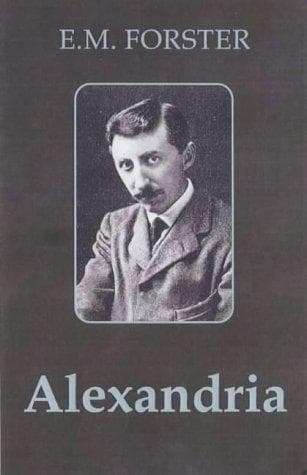
Alexandria: A History and a GuideForster, E. M. (Edward Morgan)
History
Alexandria: A History and a Guide
Forster, E. M. (Edward Morgan)
Alexandria (Egypt) -- Guidebooks; Alexandria (Egypt) -- History
Since the bombardment of 1882, the city has known other troubles, but
they will not be here described. Nor will any peroration be attempted,
for the reason that Alexandria is still alive and alters even while one
tries to sum her up. Politically she is now more closely connected with
the rest of Egypt than ever in the past, but the old foreign elements
remain, and it is to the oldest of them, the Greek, that she owes such
modern culture as is to be found in her. Her future like that of other
great commercial cities is dubious. Except in the cases of the Public
Gardens and the Museum, the Municipality has scarcely risen to its
historic responsibilities. The Library is starved for want of funds, the
Art Gallery cannot be alluded to, and links with the past have been
wantonly broken—for example the name of the Rue Rosette has been altered
and the exquisite Covered Bazaar near the Rue de France destroyed.
Material prosperity based on cotton, onions, and eggs, seems assured,
but little progress can be discerned in other directions, and neither
the Pharos of Sostratus nor the Idylls of Theocritus nor the Enneads of
Plotinus are likely to be rivalled in the future. Only the climate only
the north wind and the sea remain as pure as when Menelaus the first
visitor landed upon Ras-el-Tin, three thousand years ago; and at night
the constellation of Berenice’s Hair still shines as brightly as when it
caught the attention of Conon the astronomer.
THE GOD ABANDONS ANTONY.
When at the hour of midnight
an invisible choir is suddenly heard passing
with exquisite music, with voices—
Do not lament your fortune that at last subsides,
your life’s work that has failed, your schemes that have proved
illusions.
But like a man prepared, like a brave man,
bid farewell to her, to Alexandria who is departing.
Above all, do not delude yourself, do not say that it is a dream,
that your ear was mistaken.
Do not condescend to such empty hopes.
Like a man for long prepared, like a brave man,
like to the man who was worthy of such a city,
go to the window firmly,
and listen with emotion,
but not with the prayers and complaints of the coward
(Ah! supreme rapture!)
listen to the notes, to the exquisite instruments of the mystic
choir,
and bid farewell to her, to Alexandria whom you are losing.
C. P. CAVAFY.[6]
Footnote 6:
The local reference of this exquisite poem is to the omen that
heralded the defeat of Mark Antony (p. 26). The poet is eminent among
the contemporary writers of Greece; he and his translator, Mr. George
Valassopoulo, are both residents of Alexandria.
[Illustration: Alexandria: Historical Map Ancient Sites in CAPITALS
Modern Sites bracketed (...)]
------------------------------------------------------------------------
PART II.
Public-domain text, read in full here on John Shaqi.
Reviews
Reviews
No reviews yet
Be the first to share your thoughts on this work.
Elsewhere in the archive
Join the Discussion
Join the discussion
Sign in to leave a comment or review.
Sign InorCreate an account