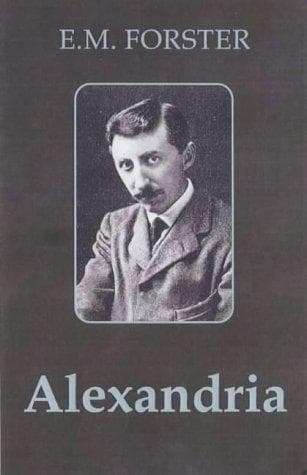
Alexandria: A History and a GuideForster, E. M. (Edward Morgan)
History
Alexandria: A History and a Guide
Forster, E. M. (Edward Morgan)
Alexandria (Egypt) -- Guidebooks; Alexandria (Egypt) -- History
EACH SIDE OF THE ROOM, near entrance door: Two _Cases_ of papyri—the
left hand one containing two interesting inscriptions. 119. Incantation
to the Nile and to the great spirit Sabaoth shewing mixture of Egyptian
and Jewish faiths. 122. Demand of Aurelia, priestess of the crocodile
god, Petesouchos, for certificate of having worshipped the gods. It was
made during the Decian persecution, (p. 46), and suggests that, despite
her position, she had been accused of Christianity. 352_b_. On a
pedestal: Colossal scarab. 35_b_. Fine headless sphinx. 351. Great Apis
bull (restored); period of Hadrian. 350. Sphinx, rather sentimental,
with crossed paws. All these last four were found near Pompey’s Pillar.
(p. 144).
ROOM 7: ANCIENT EGYPT: CANOPUS.
These monuments, though mostly found in the Aboukir sites (p. 180), may
have been imported there at some unknown date from Heliopolis or Sais.
1. Statue of a Hyksos Pharaoh (Shepherd King, about B.C. 1800) which has
been appropriated by Rameses II (B.C. 1300); on the shoulder appears
Rameses’ daughter Hout-Ma-Ra, traditionally the princess who found Moses
in the bullrushes.
18. Part of a statue of Rameses II.
_Case C_ (left of room). Two statues of a Ptolemaic official; from the
Temple of Serapis, Alexandria, (p. 146).
ROOM 8: ANCIENT EGYPT.
Five mummy cases.
_Case B_ (right): The interior is painted—an eerie receptacle. By the
head, a winged serpent; along the sides, a serpent with the sign of Life
(cf. the Coptic Cross, Room 1, No. 106, also p. 69), and genii, mostly
serpent-headed. The mummy lay on the sun-goddess Neith, on a serpent
entwined round a lotus, and on the soul as a bird. The outside of the
case is also painted. From Deir el Bahri, Upper Egypt.
_Case E_ (centre): Richly painted mummy with the goddess Neith on its
breast. Very effective. Date—about B.C. 600.
3 (back wall): Relief from over the door of a tomb. Left the deceased,
enthroned between two bouquets of lotus: to one of them a couple of
ducks are tied. Then comes an old harpist, who is singing, accompanied
by a girl on a drum, and by two others who clap their hands. To the
right, a man preparing drink; then two dancing girls. Beautiful work.
From Heliopolis.
ROOM 9: ANCIENT EGYPT: CROCODILE WORSHIP.
The contents of this room, though not Alexandrian, are Ptolemaic, and
well illustrate that dynasty in its Egyptian aspect. They come from the
Temple of Petesouchos, the crocodile god of the Fayoum. The temple was
adorned by Agathodorus, a Greek official there B.C. 137, in honour of
Ptolemy VII (Physkon) and of his two wives, one his sister, one his
niece, and both called Cleopatra. (For the marriage arrangements of this
unattractive monarch, _see_ tree, p. 12). The temple itself has been in
part brought to the Museum, and well set up in the North Garden (_see_
below).
Public-domain text, read in full here on John Shaqi.
Reviews
Reviews
No reviews yet
Be the first to share your thoughts on this work.
Elsewhere in the archive
Join the Discussion
Join the discussion
Sign in to leave a comment or review.
Sign InorCreate an account