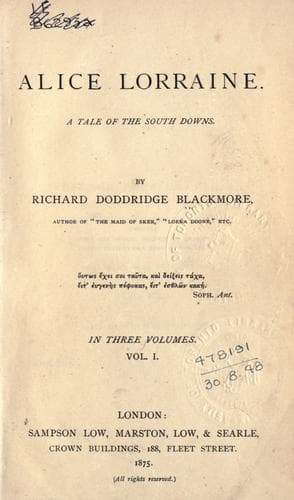
Alice Lorraine: A Tale of the South DownsBlackmore, R. D. (Richard Doddridge)
General
Alice Lorraine: A Tale of the South Downs
Blackmore, R. D. (Richard Doddridge)
Peninsular War, 1807-1814 -- Fiction; South Downs (England) -- Fiction
The Rector now, week after week, had been longing for a bit of sport.
His open and jovial nature had been shut up, pinched, and almost
poisoned for want of proper outlet. He hated books, and he hated a
pen, and he hated doing nothing; and he never would have horse-whipped
Bonny, if he had been as he ought to be. Moreover, he had been greatly
bothered, although he could not clearly put it, by all these reports
about Coombe Lorraine, and Sir Roland’s manner of scorning them.
But now here he was, in a wayfaring dress, free from the knowledge of
any one, able to turn to the right or the left, as either side might
predominate; with a bagful of guineas to spend as his own, and yet feel
no remorse about them. Tush! that does not express it at all. With a
bagful of guineas to spend as he chose, and rejoice in the knowledge
that he was spending another man’s money, for his own good, and the
benefit of humanity. This is a fine feeling, and a rare one to get the
luck of. Therefore, whosoever gets it, let him lift up his heart, and
be joyful.
Whether from that fine diffidence, which so surely accompanies merit,
or from honourable economy in the distribution of trust-funds, or
from whatever other cause it was,--in the face of all the town of
Tonbridge, this desirable traveller turned his pony into the quiet
yard of the old-fashioned inn, “The Chequers.” All the other ostlers
grunted disapprobation, and chewed straws; while the one ostler of “The
Chequers” rattled his pail with a swing of his elbow, hissed in the
most enticing attitude, and made believe to expect it.
Mr. Hales, in the manner of a cattle-jobber (which was his presentment
now), lifted his right leg over the mane of the pony, and so came
downward. Everybody in the yard at once knew thoroughly well what his
business was. And nobody attempted to cheat him in the inn; because
it is known to be a hopeless thing to cheat a cattle-jobber, in any
other way than by gambling. So that with little to say, or be said,
this unclerkly clerk had a good supper, and smoked a wise pipe with his
landlord.
Of course he made earnest inquiries about all the farmers of the
neighbourhood, and led the conversation gently to the Grower and his
affairs; and as this chanced to be Master Lovejoy’s own “house of call”
at Tonbridge, the landlord gave him the highest character, and even the
title of “Esquire.”
“Ah, yes,” he exclaimed, with his rummer in one hand, and waving his
pipe with the other; “there be few in these here parts to compare
with Squire Lovejoy. One of the true old Kentish stock, sir; none of
your come-and-go bagmen. I have heered say that that land have been a
thousand year in the family.”
“Lord bless me!” cried Mr. Hales; “why, we get back to the time of the
Danes and Saxons!”
Public-domain text, read in full here on John Shaqi.
Reviews
Reviews
No reviews yet
Be the first to share your thoughts on this work.
Elsewhere in the archive
Join the Discussion
Join the discussion
Sign in to leave a comment or review.
Sign InorCreate an account