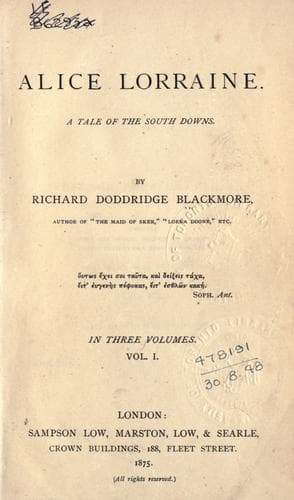
Alice Lorraine: A Tale of the South DownsBlackmore, R. D. (Richard Doddridge)
General
Alice Lorraine: A Tale of the South Downs
Blackmore, R. D. (Richard Doddridge)
Peninsular War, 1807-1814 -- Fiction; South Downs (England) -- Fiction
The treasure-carts had been upset, and two of the sturdy mules, at last
foundered with hard labour, lay in their blood, contented that their
work was over, and that man (a greater brute than themselves) had taken
all he wanted out of them. The rest had been driven or ridden on, being
useful for further torment. And here on the ground were five stout
coffers of good British iron; but, alas! the good British gold was
flown.
At this sight, Hilary stared a little; and the five chests in the
morning sun glanced back at him with such a ludicrously sad expression
of emptiness, that, in spite of all his trouble, the poor young captain
broke into a hearty laugh. Then his horse walked up, and sniffed at
them, being reminded, perhaps, of his manger; and Hilary, dismounting,
found a solitary guinea lying in the dust, the last of fifty thousand.
The trail of coarse esparto bags, into which the gold had been poured
from the coffers, for the sake of easier transport, was very distinct
in the parts untrampled by horses, mules, or brigands. But of all the
marks there was none more conspicuous than the impressions of some
man’s boots, larger and heavier than the rest, and appearing, over and
over again, here, there, and everywhere. For a few yards up the rugged
mountain, these and other footprints might be traced without much
trouble, till suddenly they dispersed, grew fainter, and then wholly
disappeared in trackless, hopeless, and (to a stranger) impenetrable
forest.
“Thou honest guinea that would not be stolen!” cried poor Lorraine,
as he returned and picked up the one remaining coin; “haply I shall
never own another honest guinea. Forty-nine thousand nine hundred and
ninety-nine prefer the ownership of rogues. Last of guineas, we will
not part till gold outlives humanity!”
“Now, sir, is there anything us can do?” cried Bones and Nickles, or
one of them. “We has followed all the way up this here long hill, for
want of better orders.”
“No, my good fellows, there is nothing to be done. We cannot follow any
further. I must go with all speed to report myself. Follow me, if you
can keep up.”
The sergeant nodded to the corporal--for, loyal and steadfast as they
were, suspicion was at work with them; that ugly worm which, once set
going, wriggles into the stoutest heart. Surely it was a queer thing
of the captain not even to let them examine the spot; but order was
order, and without a word they followed the young officer back to the
high road, and then, for some hours in the heat of the day, on the way
towards Estremadura. At noontide they came to a bright, broad stream,
known to them as the Guadalmez, a confluent of the Guadiana; and here
they were challenged, to their great surprise, by a strong detachment
of British hussars.
“What is your duty here?” asked Lorraine, as his uniform and face were
acknowledged and saluted by sentries posted across the ford.
Public-domain text, read in full here on John Shaqi.
Reviews
Reviews
No reviews yet
Be the first to share your thoughts on this work.
Elsewhere in the archive
Join the Discussion
Join the discussion
Sign in to leave a comment or review.
Sign InorCreate an account