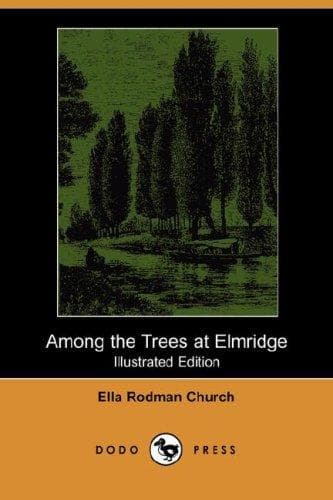
"The river poplaris found on the banks of rivers and brooks and in wet
places, and is a noble and graceful tree. The trunk is light gray in
color, and the young trees have a smooth, leather-like bark. The broad
leaves, of a very rich green, grow on stems nearly as long as
themselves, and the flowering aments are of a light-red color. The
leaf-stalks and young branches are also brightly tinted. Another of
these trees has a very singular name: it is called the necklace poplar."
[Illustration: LOMBARDY POPLAR.]
"Do the flowers grow like real necklaces?" asked Clara.
"Not quite," replied her governess, "but the reason given is something
like it. The tree is so called from the resemblance of the long ament,
before opening, to the beads of a necklace. In Europe it is known as the
Swiss poplar and the black Italian poplar. Its timber is much valued
there for building. There are also the black poplar and that queer,
stiff-looking tree the Lombardy poplar. Cannot one of you tell me where
there are some tall, narrow trees that look almost as if they had been
cut out of wood and stuck there?"
"I know where there are some," said Malcolm: "right in front of Mrs.
Bush's old house; and I think they're miserable-looking trees."
"When old and rusty, they are not in the least cheerful," replied Miss
Harson; "and it is so long since Lombardy poplars were admired that few
are found except about old places. The tree is shaped like a tall spire,
and in hot, calm weather drops of clear water trickle from its leaves
like a slight shower of rain. It was once a favorite shade-tree, and a
century ago great numbers of Lombardy poplars were planted by village
waysides, in front of dwelling-houses, on the borders of public
grounds, and particularly in avenues leading to houses that stand at
some distance from the high-road.
[Illustration: A GROUP OF POPLARS IN CASHMERE]
"The poplar is found in many lands. The Lombardy poplar, as its name
indicates, was brought from Italy, where it grows luxuriantly beside the
orange and the myrtle; but after one of our cold winters many of its
small branches will decay, and this gives it a forlorn appearance. When
fresh and green, the Lombardy poplar is quite handsome. Some one wrote
of it long ago: 'There is no other tree that so pleasantly adorns the
sides of narrow lanes and avenues, and so neatly accommodates itself to
limited enclosures. Its foliage is dense and of the liveliest verdure,
making delicate music to the soft touch of every breeze. Its
terebinthine odors scent the vernal gales that enter our open windows
with the morning sun. Its branches, always turning upward and closely
gathered together, afford a harbor to the singing-birds that make them a
favorite resort, and its long, tapering spire that points to heaven
gives an air of cheerfulness and religious tranquillity to village
scenery.'"
"I wish we had some," said Edith, "with singing-birds in 'em."
Public-domain text, read in full here on John Shaqi.
Reviews
Reviews
No reviews yet
Be the first to share your thoughts on this work.
Join the Discussion
Join the discussion
Sign in to leave a comment or review.
Sign InorCreate an account