An Epitome of the History of Medicine — John Shaqi
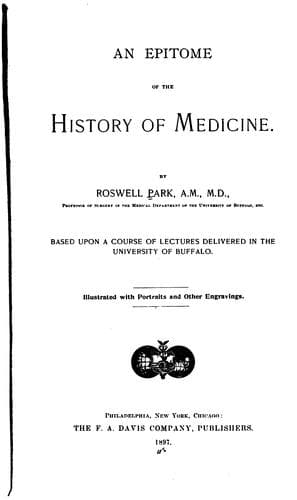
An Epitome of the History of MedicinePark, Roswell
History
An Epitome of the History of Medicine
Park, Roswell
Medicine -- History
It is Greece which furnishes us with the most interesting and the most
significant remains of the history of medicine during antiquity, as she
furnishes every other art with the same historical advantages. During
the period preceding the Trojan War there is little hut myth and
tradition. Leclerc catalogued some thirty divinities, heroes or
heroines, who were supposed to have invented or cultivated some of the
branches of medicine. _Melampus_ is perhaps{007} the first of these who
immortalized himself by extraordinary cures, especially on the daughters
of Proetus, King of Argos. These young princesses, having taken vows
of celibacy, became subjects of hysterical monomania, with delusions,
during which they imagined themselves transformed into cows and roamed
the forests instead of the palaces. This nervous delusion spread to and
involved many other women, and became a serious matter.
[Illustration: 0027]
Melampus, the shepherd, having observed the purgative effects upon goats
of white hellebore, gave to the young women milk in which this plant
had been steeped, thereby speedily effecting a cure. Scarcely less
distinguished than Melampus was _Chiron_. He was mainly distinguished
because he was the preceptor of _Æsculapius_, the most eminent of early
Greeks in this field. By some Æsculapius was considered the son of
Apollo by the nymph Coronis.
Several{008} cities of Greece contended for the honor of his birthplace,
as they did for that of Homer. That he was famous at the time of the
Argonautic expedition is seen by the fact that the twins Castor and
Pollux desired him to accompany the expedition as surgeon. Be his origin
what it may, Æsculapius was the leading character in medicine of all the
ancients, with the possible exception of Hermes among the Egyptians; in
fact, some scholars consider the two identical. Temples were erected in
his honor, priests were consecrated to them, and schools of instruction
were there established. It is related that Pluto, god of hell, alarmed
at the diminishing number of his daily arrivals, complained to Jupiter,
who destroyed the audacious healer--on which account, some wit has said,
"the modern children of Æsculapius abstain from performing prodigies,"
But the true Æsculapians, the successors of the demigod, wrere imitated
or copied by the crowd of charlatans and quacks, calling themselves
theosophs, thaumaturgs, and so on, and not alone at that date, but for
generations and centuries thereafter, Paracelsus and Mesmer being
fair examples of this class. The poet Pindar, who lived seven or eight
hundred years after Æsculapius, says that he cured ulcers, wounds,
fever, and pain of all who applied to him by enchantment, potions,
incisions, and by external applications. *
* Third Pythian Ode,
Public-domain text, read in full here on John Shaqi.
Reviews
Reviews
No reviews yet
Be the first to share your thoughts on this work.
Join the Discussion
Join the discussion
Sign in to leave a comment or review.
Sign InorCreate an account