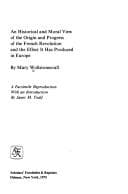
An historical and moral view of the origin and progress of the French Revolution; and the effect it has produced in EuropeWollstonecraft, Mary
Philosophy
An historical and moral view of the origin and progress of the French Revolution; and the effect it has produced in Europe
Wollstonecraft, Mary
France -- History -- Revolution, 1789-1799 -- Causes
Had the conduct of men been sincere, and had they really pursued that
fraternity, about which they so continually declaimed; they might, in
consolidating the rights of french citizens, have established every
political advantage, which the then state of reason was capable of
adopting for the immediate benefit of society. But resentment bursting
forth, which had long lain concealed (the effect of servitude and
contumely), joined with the vanity of excelling all other nations in the
science of government, to produce an insolent audacity of conduct,
which, aiming at overturning every thing, discouraged the wavering, and
frightened the timid. Designing knaves then conceived the plan of rising
to eminence by the accumulating foibles of the multitude, who, loosened
from all restraint, were easily caught by the insidious arts of the most
contemptible anarchists.
The object of those monsters, who were meditating the violation of the
sacred ties of honour and humanity, was early perceived by the more
penetrating; but instead of opposing themselves to their designs, they
for the most part became initiated into their clubs; whilst others, more
haughty, though perhaps less under the direction of principles,—if there
were any among them,—emigrated, leaving their country verging towards
the whirlpool of civil discord, and all it’s concomitant wretchedness.
It is necessary for us to attend closely to these considerations, in
order to be enabled to form a just opinion of the various revolutions
which have succeeded each other:—because, from a superficial view of
things of this nature, we frequently attribute to the passions, or
innate turpitude of man, what was merely the effect of moral depravity.
Hence it has happened, that so many of the admirers of the revolution,
in its infancy, now talk of extravagant innovations, tending to overturn
all the barriers of justice,—to trample on the feelings of humanity, and
to destroy every thing splendid and beautiful,—the production of ages,
industry, taste, and learning.
Public-domain text, read in full here on John Shaqi.
Reviews
Reviews
No reviews yet
Be the first to share your thoughts on this work.
Elsewhere in the archive
Join the Discussion
Join the discussion
Sign in to leave a comment or review.
Sign InorCreate an account