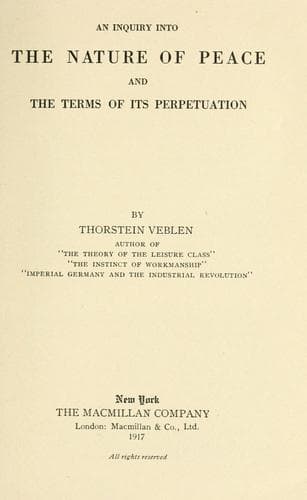
An Inquiry into the Nature of Peace and the Terms of Its PerpetuationVeblen, Thorstein
Philosophy
An Inquiry into the Nature of Peace and the Terms of Its Perpetuation
Veblen, Thorstein
Peace; World War, 1914-1918 -- Peace
Certain consequences follow from this state of the case. Technology and
industrial experience, in large volume and at a high proficiency, are
indispensable to the conduct of war on the modern plan, as well as a
large, efficient and up-to-date industrial community and industrial
plant to supply the necessary material of this warfare. At the same time
the discipline of the campaign, as it impinges on the rank and file as
well as on the very numerous body of officers and technicians, is not at
cross purposes with the ordinary industrial employments of peace, or not
in the same degree as has been the case in the past, even in the recent
past. The experience of the campaign does not greatly unfit the men who
survive for industrial uses; nor does it come in as a sheer interruption
of their industrial training, or break the continuity of that range of
habits of thought which modern industry of the technological order
induces; not in the same degree as was the case under the conditions of
war as carried on in the nineteenth century. The cultural, and
particularly the technological, incidence of this modern warfare should
evidently be appreciably different from what has been experienced in the
past, and from what this past experience has induced students of these
matters to look for among the psychological effects of warlike
experience.
It remains true that the discipline of the campaign, however impersonal
it may tend to become, still inculcates personal subordination and
unquestioning obedience; and yet the modern tactics and methods of
fighting bear somewhat more on the individual's initiative, discretion,
sagacity and self-possession than once would have been true. Doubtless
the men who come out of this great war, the common men, will bring home
an accentuated and acrimonious patriotism, a venomous hatred of the
enemies whom they have missed killing; but it may reasonably be doubted
if they come away with a correspondingly heightened admiration and
affection for their betters who have failed to make good as foremen in
charge of this teamwork in killing. The years of the war have been
trying to the reputation of officials and officers, who have had to meet
uncharted exigencies with not much better chance of guessing the way
through than their subalterns have had.
Public-domain text, read in full here on John Shaqi.
Reviews
Reviews
No reviews yet
Be the first to share your thoughts on this work.
Elsewhere in the archive
Join the Discussion
Join the discussion
Sign in to leave a comment or review.
Sign InorCreate an account