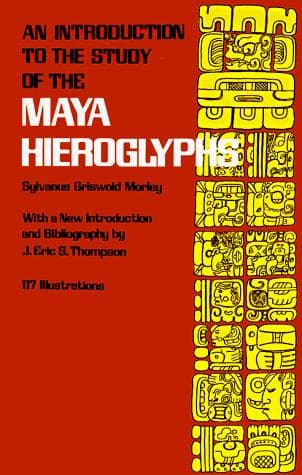
In Maya inscriptions the glyphs are arranged in parallel columns, which are
to be read two columns at a time, beginning with the uppermost glyph in the
left-hand column, and then from left to right and top to bottom, ending
with the lowest glyph in the second column. Then the next two columns are
read in the same order, and so on. In reading glyphs in a horizontal band,
the order is from left to right in pairs. The writer knows of no text in
which the above order of reading is not followed.
A brief examination of any Maya text, from either the inscriptions or the
codices, reveals the presence of certain elements which occur repeatedly
but in varying combinations. The apparent multiplicity of these
combinations leads at first to the conclusion that a great number of signs
were employed in Maya writing, but closer study will show that, as compared
with the composite characters or glyphs proper, the simple elements are few
in number. Says Doctor Brinton (1894 b: p. 10) in this connection: "If we
positively knew the meaning ... of a hundred or so of these simple
elements, none of the inscriptions could conceal any longer from us the
general tenor of its contents." Unfortunately, it must be admitted that but
little advance has been made toward the solution of this problem, perhaps
because later students have distrusted the highly fanciful results achieved
by the earlier writers who "interpreted" these "simple elements."
[Illustration: FIG. 10. Examples of glyph elision, showing elimination of
all parts except essential element (here, the crossed bands).]
Moreover, there is encountered at the very outset in the study of these
elements a condition which renders progress slow and results uncertain. In
Egyptian texts of any given period the simple phonetic elements or signs
are unchanging under all conditions of composition. Like the letters of our
own alphabet, they never vary and may be recognized as unfailingly. On the
other hand, in Maya texts each glyph is in itself a finished picture,
dependent on no other for its meaning, and consequently the various
elements entering into it undergo very considerable modifications in order
that the resulting composite character may not only be a balanced and
harmonious {24} design, but also may exactly fill its allotted space. All
such modifications probably in no way affect the meaning of the element
thus mutilated.
[Illustration: FIG. 11. Normal-form and head-variant glyphs, showing
retention of essential element in each.]
Public-domain text, read in full here on John Shaqi.
Reviews
Reviews
No reviews yet
Be the first to share your thoughts on this work.
Join the Discussion
Join the discussion
Sign in to leave a comment or review.
Sign InorCreate an account