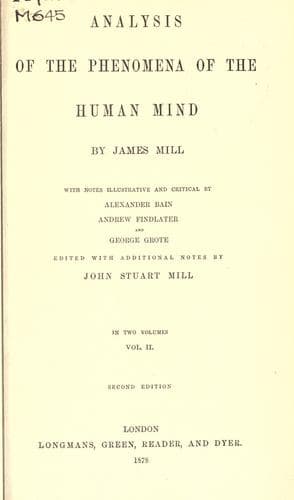
Analysis of the Phenomena of the Human MindMill, James
PhilosophyPhilosophy
Analysis of the Phenomena of the Human Mind
Mill, James
Psychology
[Bain's footnote 31: There is more than association in the case here
supposed. Fear, anxiety, and painful emotions generally, cause
disorder in the digestive and other vital functions, as a part of
their nature. Every mental state can be proved to have its
counterpart physical state; joy, sorrow, fear, are each embodied in
a distinct group of physical effects in the nervous system, the
muscular movements, and the organic processes. The physical side of
agreeable emotions, as a rule, is a heightened tone of the purely
animal functions. The physical side of fear is a complicated series
of effects, one of them being the depression of the organic
processes, digestion among the rest. In this respect, however, it
more or less resembles severe pain, sorrow, shame, remorse, and
other states, characterised by the general phrase "depressing
passions;" the depression being both mental and physical.
The reciprocal agency described in the text, whereby the painful
sensations of indigestion induce fear, is not dependent on the
association of ideas, but on the deep connections of the emotional
states with one another, through their physical accompaniments. A
painful feeling of indigestion has much in common with states of
depression due to mental causes, as, for example, the shock of a
misfortune, fear, sorrow, and the like. From this alliance it
favours the ideas of depressing states. It does more; it directly
reduces that vigorous tone of the system, which is the support of
the courageous and sanguine disposition; and hence, surrenders the
mind an easy prey to any chance incentive of alarm or
anxiety.--_B._]
[Editor's footnote 32: The law of association laid down in this
section ranks among the principal of what may be termed the laws of
Obliviscence. It is one of the widest in its action, and most
important in its consequences of all the laws of the mind; and the
merit of the author, in the large use he makes of it is very great,
as, though it is the key that unlocks many of the more mysterious
phenomena of the mind, it is among the least familiar of the mental
laws, and is not only overlooked by the great majority of
psychologists, but some, otherwise of merit, seem unable to see and
understand the law after any quantity of explanation.
Public-domain text, read in full here on John Shaqi.
Reviews
Reviews
No reviews yet
Be the first to share your thoughts on this work.
Elsewhere in the archive
Join the Discussion
Join the discussion
Sign in to leave a comment or review.
Sign InorCreate an account