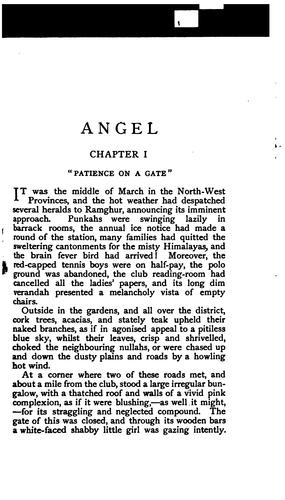
Angel: A sketch in Indian inkCroker, B. M. (Bithia Mary)
History
Angel: A sketch in Indian ink
Croker, B. M. (Bithia Mary)
British -- India -- Fiction; India -- History -- British occupation, 1765-1947 -- Fiction
Angel Gascoigne, who shared in all the pomp and circumstance of
the Commissioner's semi-royal progress, enjoyed this, her first
experience of a camp, most thoroughly. The life was interesting, it
was novel, it never hasted, never rested—what more could any girl
desire? The beautiful tract through which they passed, be it snipe
district or tiger district, waving crops, or forest lands, impressed
the new-comer with its free atmosphere, the Biblical simplicity of
the lives of the people, odd bits of folklore, and the weird stories
connected with their camping-grounds, each and all appealed to Angel's
quick imagination. She and her hostess enjoyed many rides and walks,
explorations, and _tête-à-tête_ discussions, though occasionally a
police officer or a collector joined the camp for a day or two, and
then the talk at dinner veered towards the revenue, the floods, or the
records. Now and then Major Gascoigne cut across the country, caught up
the party, and remained a short time. Angel hailed these visits with
a deep but secret joy—though he by no means gave her the lion's share
of his attention—it was a _solitude à trois_. He brought books and
papers, which he read to the ladies as they worked under the trees; he
brought them scraps of news, the latest station joke; he brought with
him a quickened enjoyment of the lazy, long days, and when he departed,
he left them the anticipation of his return.
One evening Mrs. Gordon was detained by a servant just as they were
about to start for a stroll, and Major Gascoigne and his cousin went
on alone. They left the white tents behind them, and sauntered down to
a ruined well, such as one sees in the prints of Rebecca, or the Woman
of Samaria. When they had reached it, Angel sat down on a broken step
and said, "Let us wait here—she won't be long," nodding towards the
distant camp. "I have something to show you," she continued, looking up
at her companion. "I have had a long letter from grandmamma this mail."
"Really?" he exclaimed; "and what has she to say?"
"That she misses me dreadfully, and is sorry for our quarrel. If I will
forgive her, she will forgive me, and will be glad if I will return to
live with her—for nothing."
Gascoigne gave a faint exclamation of surprise.
"She will lodge my passage money at once," continued the girl. "I have
only to send a wire—perhaps you would read her letter?" and she held
it up to him. Philip took it and read it over, slowly; Lady Augusta's
writing was scratchy and illegible, but he gathered that she was
devoted to her grandchild, and the whole epistle breathed a passionate
longing to see her once more.
Public-domain text, read in full here on John Shaqi.
Reviews
Reviews
No reviews yet
Be the first to share your thoughts on this work.
Elsewhere in the archive
Join the Discussion
Join the discussion
Sign in to leave a comment or review.
Sign InorCreate an account