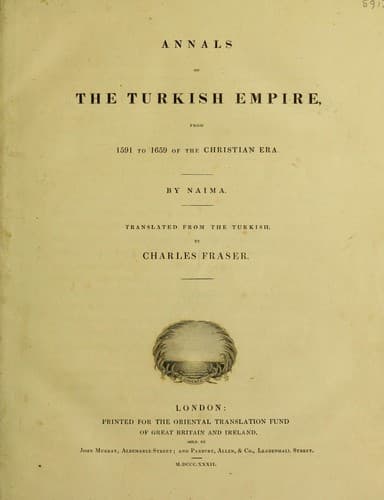
Annals of the Turkish Empire, from 1591 to 1659Naima, Mustafa
History
Annals of the Turkish Empire, from 1591 to 1659
Naima, Mustafa
Turkey -- History -- 1453-1683
Meantime the enemy was busy. During the night season they accoutred
themselves in their various arms, and one division after another took
up its position in the trenches formerly prepared, till they were
completely filled; the boats were all manned with volunteers, and at
daylight the signal-gun was fired, the sound of which seemed to awaken
heaven and earth; and the ball passed over the wall at the gate leading
to Sigetwar, which was forty feet high, and was stopped by the odá
of Mahmúd Chorbájí. The enemy, immediately on this signal-gun being
fired, commenced an assault from five different places at once. When
their fleet of boats had sailed down opposite the fortress, the cannons
which had secretly been placed in hollows in the mound which surrounded
Kaniza, opened upon them, and soon sent them, with all on board of
them, to the bottom of the river. This powerful, but unexpected
reception, astonished the infidels completely, but it had also the
effect of rousing their fury to a greater height.
When the besieged Moslems first perceived the tumultuous assault of the
enemy, they were a little staggered and disheartened; but Hasan Páshá,
the heroic vezír, stepped in before them and stimulated their courage.
“My brave lions,” said he, “this day is a day of peculiar effort and
exertion: turn not away your faces from the contest, but be firm and
inflexible for one hour longer, and this impoverished straggling host
will be vanquished.” This speech, like all his former speeches, had
its desired effect upon the minds of the besieged, who became more
determined than ever to sell their lives as dearly as possible; and
they resolved to fall victims for the sake of their religion, rather
than yield up the city and fortress of Kaniza. Every assault of the
enemy was, therefore, resisted with such desperate bravery and courage
as to outmatch every thing. The commander of the janissaries and chief
of the cavalry, Sefer Aghá, performed the most astonishing feats of
bravery. He was, at that time, only a segbán báshí, but was afterwards
raised to the dignity of a páshá.
In the meantime, the artillery of the garrison committed the most
tremendous havoc among the infidels; but they were no sooner hewn down
than their places were filled up by others sent forward to maintain the
struggle. The awful sound which proceeded from the combatants on both
sides is indescribable. The confused noise of drums and trumpets, the
clash of arms, the thunder of cannon and musketry, and the bursts of
mortars, baffle all description. Heaven and earth trembled. The carnage
of that day was so awfully terrible that the compassionate angels in
the seventh heaven looked down on the scene with astonishment and
wonder, and entreated God to scatter and confound the associates of
idolatry.
Public-domain text, read in full here on John Shaqi.
Reviews
Reviews
No reviews yet
Be the first to share your thoughts on this work.
Elsewhere in the archive
Join the Discussion
Join the discussion
Sign in to leave a comment or review.
Sign InorCreate an account