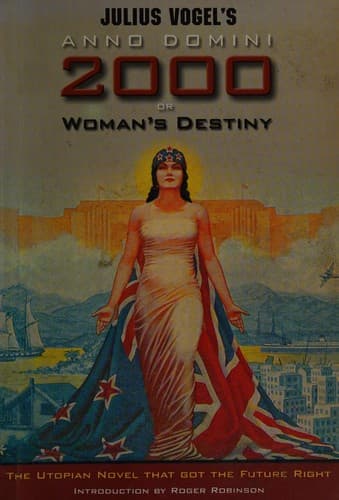
Anno Domini 2000; or, Woman's DestinyVogel, Julius, Sir
Science
Anno Domini 2000; or, Woman's Destiny
Vogel, Julius, Sir
Feminist fiction; New Zealand -- Fiction; Two thousand, A.D. -- Fiction; Utopian fiction; Utopias -- Fiction; Women -- Fiction
Three days later Hilda stood beside another deathbed. All that care and
science could effect was useless; Colonel Laurient was dying. The fiat
had gone forth; life was impossible. The black horses would once more
come to the door of the new mansion. He who loved Hilda so truly, so
unselfishly, was to share the fate of that other unworthy lover. Hilda's
grief was of extreme poignancy, and scarcely less grieved was the
Emperor himself. He had passed most of his time since he had learnt
Laurient's danger beside his couch, and now the end was approaching. On
one side of the bed was the Emperor, on the other Hilda, Duchess of New
Zealand. How puerile the title seemed in the presence of the dread
executioner who recognises no distinction between peasant and monarch.
The mightiest man on earth was utterly powerless to save his friend, and
the day would come when he and the lovely girl who was to be his bride
would be equally powerless to prolong their own lives. In such a
presence the distinctions of earth seemed narrowed and distorted.
"Sir," said the dying man, "my last prayer is that you and Hilda may be
happy. She is the noblest woman I have ever met. You once told me," he
said, turning to her, "that you felt for me a sister's love. Will you
before I die give me a sister's kiss and blessing?" Hilda, utterly
unable to control her sobs, bent down and pressed a kiss upon his lips.
It seemed as if life passed away at that very moment. He never moved or
spoke again. He was buried in the grounds of one of the royal
residences, and the Emperor and Hilda erected a splendid monument to his
memory. No year ever passed without their visiting the grave of the man
who had served them so well.
Their marriage was deferred for a month in consequence of Colonel
Laurient's death, but the ceremony was a grand one. Nothing was wanting
in the way of pomp and display to invest it with the utmost importance.
Throughout the whole Empire there were great rejoicings. It really
appeared as if the Emperor could not have made a more popular marriage,
and that unalloyed happiness was in store for him and his bride.
EPILOGUE.
Public-domain text, read in full here on John Shaqi.
Reviews
Reviews
No reviews yet
Be the first to share your thoughts on this work.
Elsewhere in the archive
Join the Discussion
Join the discussion
Sign in to leave a comment or review.
Sign InorCreate an account