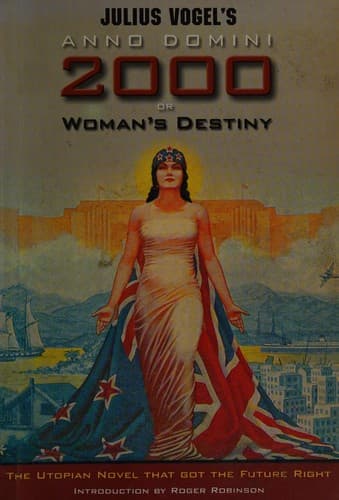
Anno Domini 2000; or, Woman's DestinyVogel, Julius, Sir
Science
Anno Domini 2000; or, Woman's Destiny
Vogel, Julius, Sir
Feminist fiction; New Zealand -- Fiction; Two thousand, A.D. -- Fiction; Utopian fiction; Utopias -- Fiction; Women -- Fiction
The time had, however, come when they must discuss it. The Princess had
already reached her legal majority, and the Prince would shortly arrive
at the age which was prescribed as the majority of the heir to the
throne. His own unfitness for the sovereignty and the exceeding
suitability of his sister were widely known, and the newspapers had just
commenced a warm discussion on the subject. The Cabinet, too, were
inclined to take action. Many years since, Mrs. Hardinge died quite
suddenly of heart disease; and Lady Cairo had for a long period filled
the post of Prime Minister. Lady Garstairs, _née_ Phoebe Buller, was
leader of the Opposition. She was still a close friend of the Empress,
and she shared the opinion of her imperial mistress that the subject had
better not be dealt with. But Lady Cairo, who had always thought it
ought to have been settled before the Emperor's marriage, was very much
embarrassed now by the strong and general demand that the question
should be immediately reopened. She had several interviews with the
Emperor on the subject. His Majesty did not conceal his personal desire
that his daughter should succeed, or his opinion that she was signally
fitted for the position; but nothing, he declared, would induce him to
allow his son's rights to be assailed without the Prince's full and free
consent. Meanwhile the Prince showed no sign. It seemed as if he alone
of all the subjects of the Empire knew and cared nothing about the
matter. He rarely spoke of public affairs, and scarcely ever read the
newspapers, especially those portions of them devoted to politics.
The Emperor felt a discussion with the Empress could no longer be
avoided; and we meet them once more at a long and painful interview, in
which they unburdened the thoughts which each had concealed from the
other for years past.
"Dear Hilda," said the Emperor, "do not misunderstand me. I would rather
renounce the crown than allow our son's rights to be prejudiced without
his approval."
"Yes, yes, I understand that," said the Empress; "and I recognise your
sense of justice. I do not think that you love Albert as much as you do
Victoria, and you certainly have not that pride in him which you have in
her; whilst I--I love my boy, and cannot bear that he should suffer."
"My dear," said the Emperor, "that is where we differ. I love Albert,
and I admire his high character; but I do not think it would be for his
happiness that he should reign, nor that he should now relinquish all
the studies in which he delights, in order to take his proper position
as heir to the throne. In a few weeks he will be of age; and if he is to
succeed me, duties of a most onerous and constant character will devolve
on him. He is, I will do him the justice to say, too conscientious to
neglect his duty; and I believe he will endeavour to attend to public
affairs and cast away all those studies that most delight him: but the
change will make him miserable."
Public-domain text, read in full here on John Shaqi.
Reviews
Reviews
No reviews yet
Be the first to share your thoughts on this work.
Elsewhere in the archive
Join the Discussion
Join the discussion
Sign in to leave a comment or review.
Sign InorCreate an account