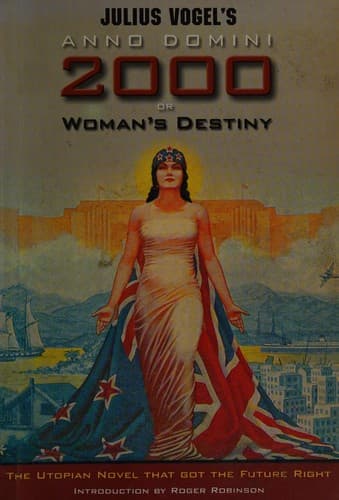
Anno Domini 2000; or, Woman's DestinyVogel, Julius, Sir
Science
Anno Domini 2000; or, Woman's Destiny
Vogel, Julius, Sir
Feminist fiction; New Zealand -- Fiction; Two thousand, A.D. -- Fiction; Utopian fiction; Utopias -- Fiction; Women -- Fiction
"Rebellion, foul, dishonouring word,
Whose wrongful blight so oft has stained
The holiest cause that tongue or sword
Of mortal ever lost or gained--
How many a spirit born to bless
Has shrunk beneath that withering name
Whom but a day an hour's success,
Had wafted to eternal fame."
"But, my dear friends," pursued Mrs. Hardinge, "do not think that I
excuse crime. The end does not justify the means. Even the harm from
which good results is to be execrated. The saddest actors in history
are those who by their own infamy benefited or hoped to benefit others.
"For one sad losel soils a name for aye,
However mighty in the olden time;
Not all that heralds rake from coffined clay,
Nor florid prose, nor honeyed words of rhyme
Can blazon evil deeds or consecrate a crime."
When the applause these lines elicited subsided, Mrs. Hardinge dilated
on the proposed Home Rule that Mr. Gladstone offered. Naturally the
Irish party accepted it, but a close consideration convinced her that it
was fortunate it was not carried into effect. The local powers Mr.
Gladstone offered were very moderate, far less than the Colonies then
possessed, whilst, as the price of them, Ireland was asked to virtually
relinquish all share in the government of the country. Gladstone saw
insuperable difficulties in the way of establishing a federal
parliament; and without it his proposals, if carried into operation,
would have made Ireland still more governed from England than it was
without the so-called Home Rule. In fact, the fruition of Mr.
Gladstone's proposals would have driven Ireland to fight for
independence. "We Irish are not disposed," declared Mrs. Hardinge, "to
submit to be excluded from a share in the government of the nation to
which we belong. Mr. Gladstone would virtually have so excluded us; and
if we had taken as a boon the small instalment of self-government he
offered, we could only have taken it with the determination to use the
power we acquired for the purpose of seeking more or of gaining
independence. Yes, my fellow-countrymen," she continued amidst loud
cheers, "it was good for us, seeing how happily we now live with
England, that we did not take Mr. Gladstone's half-measure. Yet there
was great suffering and great delay. Weariness and concession stilled
the question for a time; but the Irish continued in a state of more or
less suppressed irritation, both from the sense of the indignity of not
being permitted local government, and from the actual evils resulting
from absenteeism. Relief came at length. It came from the great
Colonies the energy of all of us--Irish, English, and Scotch--had built
up." Long, continuous cheering interrupted the speaker. "You may well
cheer," she continued. "The memory of the great colonial heroes whose
action we this day commemorate, and whom, as usual, we will crown with
wreaths of laurel, will always remain as green in our memory as the Isle
Public-domain text, read in full here on John Shaqi.
Reviews
Reviews
No reviews yet
Be the first to share your thoughts on this work.
Elsewhere in the archive
Join the Discussion
Join the discussion
Sign in to leave a comment or review.
Sign InorCreate an account