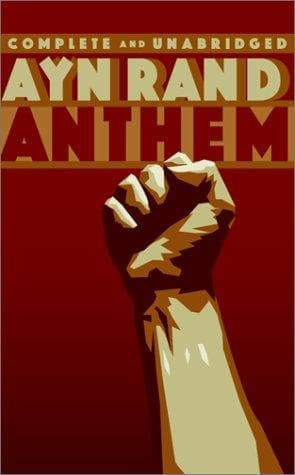
Individuality -- Fiction; Love stories; Men -- Psychology -- Fiction; Psychological fiction; Science fiction; Time travel -- Fiction
At first, man was enslaved by the gods. But he broke their
chains. Then he was enslaved by the kings. But he broke their
chains. He was enslaved by his birth, by his kin, by his race.
But he broke their chains. He declared to all his brothers that a
man has rights which neither god nor king nor other men can take
away from him, no matter what their number, for his is the right
of man, and there is no right on earth above this right. And he
stood on the threshold of the freedom for which the blood of the
centuries behind him had been spilled.
But then he gave up all he had won, and fell lower than his
savage beginning.
What brought it to pass? What disaster took their reason away
from men? What whip lashed them to their knees in shame and
submission? The worship of the word “We.”
When men accepted that worship, the structure of centuries
collapsed about them, the structure whose every beam had come
from the thought of some one man, each in his day down the ages,
from the depth of some one spirit, such spirit as existed but for
its own sake. Those men who survived those eager to obey, eager
to live for one another, since they had nothing else to vindicate
them—those men could neither carry on, nor preserve what they had
received. Thus did all thought, all science, all wisdom perish on
earth. Thus did men—men with nothing to offer save their great
number—lost the steel towers, the flying ships, the power wires,
all the things they had not created and could never keep.
Perhaps, later, some men had been born with the mind and the
courage to recover these things which were lost; perhaps these
men came before the Councils of Scholars. They were answered as I
have been answered—and for the same reasons.
But I still wonder how it was possible, in those graceless years
of transition, long ago, that men did not see whither they were
going, and went on, in blindness and cowardice, to their fate. I
wonder, for it is hard for me to conceive how men who knew the
word “I” could give it up and not know what they lost. But such
has been the story, for I have lived in the City of the damned,
and I know what horror men permitted to be brought upon them.
Perhaps, in those days, there were a few among men, a few of
clear sight and clean soul, who refused to surrender that word.
What agony must have been theirs before that which they saw
coming and could not stop! Perhaps they cried out in protest and
in warning. But men paid no heed to their warning. And they,
these few, fought a hopeless battle, and they perished with their
banners smeared by their own blood. And they chose to perish, for
they knew. To them, I send my salute across the centuries, and my
pity.
Public-domain text, read in full here on John Shaqi.
Reviews
Reviews
No reviews yet
Be the first to share your thoughts on this work.
Join the Discussion
Join the discussion
Sign in to leave a comment or review.
Sign InorCreate an account