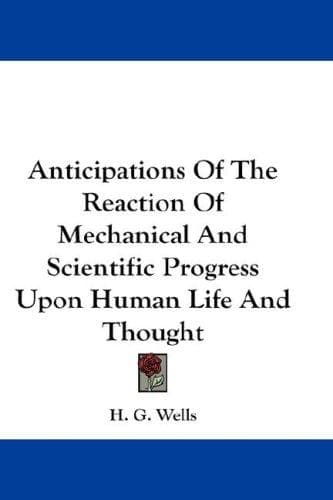
Anticipations of the reaction of mechanical and scientific progress upon human life and thoughtWells, H. G. (Herbert George)
History
Anticipations of the reaction of mechanical and scientific progress upon human life and thought
Wells, H. G. (Herbert George)
Civilization; Communication and traffic; Social prediction; Twentieth century -- Forecasts
If the great material developments of the nineteenth century had been
final, if they had, indeed, constituted merely a revolution and not an
absolute release from the fixed conditions about which human affairs
circled, we might even now be settling accounts with our Merovingians as
the socialists desire. But these developments were not final, and one
sees no hint as yet of any coming finality. Invention runs free and our
state is under its dominion. The novel is continually struggling to
establish itself at the relative or absolute expense of the old. The
statesman's conception of social organization is no longer stability but
growth. And so long as material progress continues, this tribute must
continue to be paid; so long as the stream of development flows, this
necessary back eddy will endure. Even if we "municipalize" all sorts of
undertakings we shall not alter the essential facts, we shall only
substitute for the shareholder the corporation stockholder. The figure
of an eddy is particularly appropriate. Enterprises will come and go,
the relative values of kinds of wealth will alter, old appliances, old
companies, will serve their time and fall in value, individuals will
waste their substance, individual families and groups will die out,
certain portions of the share property of the world may be gathered, by
elaborate manipulation, into a more or less limited number of hands,
conceivably even families and groups will be taxed out by graduated
legacy duties and specially apportioned income taxes, but, for all such
possible changes and modifications, the shareholding element will still
endure, so long as our present progressive and experimental state of
society obtains. And the very diversity, laxity, and weakness of the
general shareholding element, which will work to prevent its organizing
itself in the interests of its property, or of evolving any distinctive
traditions or positive characters, will obviously prevent its
obstructing the continual appearance of new enterprises, of new
shareholders to replace the loss of its older constituents....
Public-domain text, read in full here on John Shaqi.
Reviews
Reviews
No reviews yet
Be the first to share your thoughts on this work.
Join the Discussion
Join the discussion
Sign in to leave a comment or review.
Sign InorCreate an account