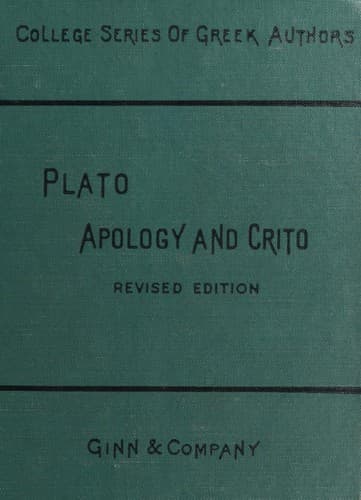
Classical literature; Philosophy, Ancient; Socrates, 470 BC-399 BC
Then I went to one man after another, being not unconscious of the
enmity which I provoked, and I lamented and feared this: but necessity
was laid upon me,—the word of God, I thought, ought to be considered
first. And I said to myself, Go I must to all who appear to know, and
find out the meaning of the oracle. And I swear to you, Athenians, by
the dog I swear!—for I must tell you the truth—the result of my mission
was just this: I found that the men most in repute were all but the
most foolish; and that others less esteemed were really wiser and
better. I will tell you the tale of my wanderings and of the
“Herculean” labours, as I may call them, which I endured only to find
at last the oracle irrefutable. After the politicians, I went to the
poets; tragic, dithyrambic, and all sorts. And there, I said to myself,
you will be instantly detected; now you will find out that you are more
ignorant than they are. Accordingly, I took them some of the most
elaborate passages in their own writings, and asked what was the
meaning of them—thinking that they would teach me something. Will you
believe me? I am almost ashamed to confess the truth, but I must say
that there is hardly a person present who would not have talked better
about their poetry than they did themselves. Then I knew that not by
wisdom do poets write poetry, but by a sort of genius and inspiration;
they are like diviners or soothsayers who also say many fine things,
but do not understand the meaning of them. The poets appeared to me to
be much in the same case; and I further observed that upon the strength
of their poetry they believed themselves to be the wisest of men in
other things in which they were not wise. So I departed, conceiving
myself to be superior to them for the same reason that I was superior
to the politicians.
At last I went to the artisans. I was conscious that I knew nothing at
all, as I may say, and I was sure that they knew many fine things; and
here I was not mistaken, for they did know many things of which I was
ignorant, and in this they certainly were wiser than I was. But I
observed that even the good artisans fell into the same error as the
poets;—because they were good workmen they thought that they also knew
all sorts of high matters, and this defect in them overshadowed their
wisdom; and therefore I asked myself on behalf of the oracle, whether I
would like to be as I was, neither having their knowledge nor their
ignorance, or like them in both; and I made answer to myself and to the
oracle that I was better off as I was.
Public-domain text, read in full here on John Shaqi.
Reviews
Reviews
No reviews yet
Be the first to share your thoughts on this work.
Join the Discussion
Join the discussion
Sign in to leave a comment or review.
Sign InorCreate an account