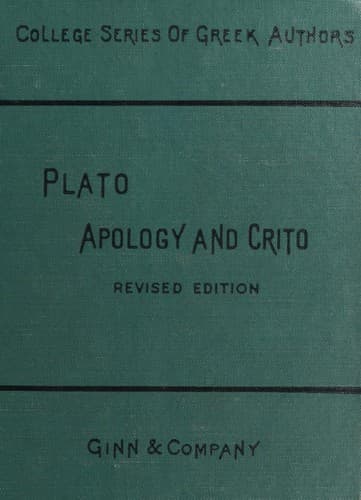
Classical literature; Philosophy, Ancient; Socrates, 470 BC-399 BC
And so he proposes death as the penalty. And what shall I propose on my
part, O men of Athens? Clearly that which is my due. And what is my
due? What return shall be made to the man who has never had the wit to
be idle during his whole life; but has been careless of what the many
care for—wealth, and family interests, and military offices, and
speaking in the assembly, and magistracies, and plots, and parties.
Reflecting that I was really too honest a man to be a politician and
live, I did not go where I could do no good to you or to myself; but
where I could do the greatest good privately to every one of you,
thither I went, and sought to persuade every man among you that he must
look to himself, and seek virtue and wisdom before he looks to his
private interests, and look to the state before he looks to the
interests of the state; and that this should be the order which he
observes in all his actions. What shall be done to such an one?
Doubtless some good thing, O men of Athens, if he has his reward; and
the good should be of a kind suitable to him. What would be a reward
suitable to a poor man who is your benefactor, and who desires leisure
that he may instruct you? There can be no reward so fitting as
maintenance in the Prytaneum, O men of Athens, a reward which he
deserves far more than the citizen who has won the prize at Olympia in
the horse or chariot race, whether the chariots were drawn by two
horses or by many. For I am in want, and he has enough; and he only
gives you the appearance of happiness, and I give you the reality. And
if I am to estimate the penalty fairly, I should say that maintenance
in the Prytaneum is the just return.
Public-domain text, read in full here on John Shaqi.
Reviews
Reviews
No reviews yet
Be the first to share your thoughts on this work.
Join the Discussion
Join the discussion
Sign in to leave a comment or review.
Sign InorCreate an account