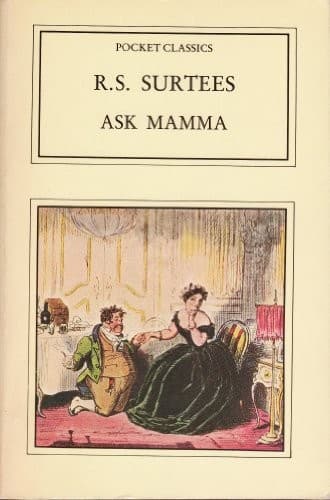
"Ask Mamma"; or, The Richest Commoner In EnglandSurtees, Robert Smith
General
"Ask Mamma"; or, The Richest Commoner In England
Surtees, Robert Smith
England -- Social life and customs -- 19th century -- Fiction; Fox hunting -- Fiction
Winnington, who consoled herself for the collapse of his fortune,
by the reflection that she had nothing of her own. Perhaps, too,
she had made allowance for the exaggeration of estimates, which
generally rate a man at three or four times his worth. The
Winningtons, however, having made a great “crow” at the “catch,”
the newly-married couple started at score as if the estate had
nothing to carry but themselves.
123m
_Original Size_
In due time the three graces appeared,—Clara, very fair, with
large languishing blue eyes and light hair; Flora, with auburn
hair and hazel eyes; and Harriet, tall, clear, and dark, like
Mamma. As they grew up, and had had their heads made into
Almanacs at home, they were sent to the celebrated Miss
Featherey’s finishing and polishing seminary at Westbourne Grove,
who for £200 a-year, or as near £200 as she could get, taught
them all the airs and graces, particularly how to get in and out
of a carriage properly, how to speak to a doctor, how to a
counter-skipper, how to a servant, and so on. The Major, we may
state, had his three daughters taken as two. Well, just as Miss
Harriet was supplying the place of Miss Clara (polished), that
great agricultural revolution, the repeal of the corn laws, took
place, and our Major, who had regarded his estate more with an
eye to its hunting and shooting capabilities than to high
farming, very soon found it slipping away from him, just as Miss
de Glancey slipped away from her dress in the thunder-storm. Up
to that time, his easy-minded agent, Mr. Bullrush, a twenty stone
man of sixty years of age, had thought the perfection of
management was not to let an estate go back, but now the Major’s
seemed likely to slip through its girths altogether. To be sure,
it had not had any great assistance in the advancing line, and
was just the same sour, rush-grown, poachy, snipe-shooting
looking place that it was when the Major got it; but this was not
his grandfather’s fault, who had buried as many stones in great
gulf-like drains, as would have carried off a river and walled
the estate all round into the bargain; but there was no making
head against wet land with stone drains, the bit you cured only
showing the wetness of the rest. The blotchy March fallows looked
as if they had got the small pox, the pastures were hardly green
before Midsummer, and the greyhound-like cattle that wandered
over them were evidently of Pharaoh’s lean sort, and looked as if
they would _never_ be ready for the butcher. Foreign cattle, too,
were coming in free, and the old cry of “down corn, down horn,”
frightened the fabulously famed “stout British farmer” out of his
wits.
Public-domain text, read in full here on John Shaqi.
Reviews
Reviews
No reviews yet
Be the first to share your thoughts on this work.
Elsewhere in the archive
Join the Discussion
Join the discussion
Sign in to leave a comment or review.
Sign InorCreate an account