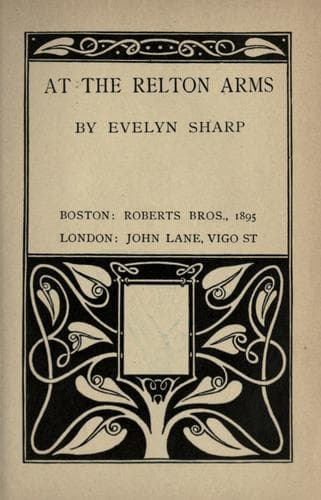
England -- Social life and customs -- 19th century -- Fiction
"I can hear wheels," said Lady Raleigh, suddenly. As she had made the
same remark at intervals during the day, no one paid her any particular
attention except Helen, who put out a protecting hand to the tea-table,
as if she anticipated a rush. This time, however, there was undoubtedly
a carriage coming up the drive; and Lady Raleigh rose to her feet
unsteadily, and became melodramatic.
"I can feel it is my boy," she said, winding her shawl tightly round
her; "come to him, Marcus, come to our long-lost child."
"Don't make a fool of yourself," growled Sir Marcus, bluntly; he had
suddenly resigned his position in the middle of the room, and was
sitting uncomfortably on the edge of the sofa instead; "he's only been
away two years, and there's no more chance of his being lost than there
is of your going on a five-mile walk."
He felt he had fired a double shot by his remark; but there came a yell
from the children on the doorstep, and his wife swept out of the room
with theatrical movements, and Sir Marcus felt more uncomfortable than
before.
"Leave him to me, children; let me have my boy's first kiss," cried Lady
Raleigh, in the hall.
"Just look," said the practical Helen, from the window: "he has hired
Bunce's best trap, and we haven't paid his bill for two quarters."
Lady Joan sat, and turned over the leaves of a magazine with her eyes
discreetly lowered, and wished that the means of escape were not so
completely cut off, and that she could get into the garden. Family jars
were intensely amusing to her critical nature; but after a whole day of
them she felt that she could reasonably dispense with any more just now,
and, from the Squire's attitude, another storm was evidently brewing.
"Hadn't you better come out, sir?" suggested Digby.
"No, sir, I will not come out," answered Sir Marcus, with a show of
determination. "Have I not already told you that I have done with the
rascal forever? I meant what I said, sir, and I will not see him nor
speak to him; he--he can go to some one else to pay his debts!"
And, unconscious that he had put more feeling into the end of his speech
than into anything else he had said, the Squire looked at his son and
his daughter as if vaguely imploring them to support him in the step he
had taken. In his most impetuous actions Sir Marcus always looked for a
supporter. Yet, much as Digby admitted the justice of his father's
anger, and much as Helen might censure the prodigal herself, there was
too much of the _esprit de corps_ in them that ran through the blood of
all the Raleighs and made them a formidable enemy to the outsider, to
allow them to acquiesce in the Squire's resentment; and he shifted his
ground a little and tried another stratagem.
Public-domain text, read in full here on John Shaqi.
Reviews
Reviews
No reviews yet
Be the first to share your thoughts on this work.
Join the Discussion
Join the discussion
Sign in to leave a comment or review.
Sign InorCreate an account