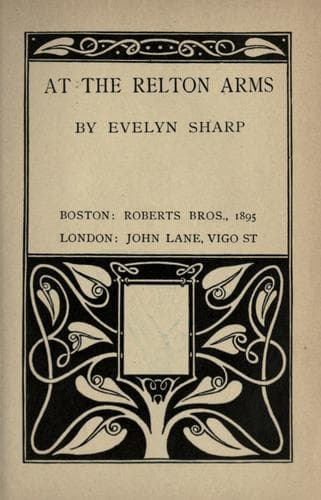
England -- Social life and customs -- 19th century -- Fiction
The musician was full thirty years old, and had been in love almost as
many times as he had photos in his West End studio; like his father, it
was only the trifling circumstances of life, or its visions, that
seemed to him to be worthy of serious consideration, and like his father
he had retained his boyish temperament past the age when such a
temperament is sufficient for the demands of circumstance. From the
first his connection with Lady Joan had been unusual. She had not begun
by fascinating him, and he had not begun by giving her singing-lessons.
She was one of the few people of his acquaintance who knew of that
secret marriage of his which had left him a widower three years ago,
with a baby son whom Sir Marcus would not acknowledge, and who did not
regard it either as a boyish entanglement from which his wife's death
had luckily released him, or as a reason for abstaining from future
marriage altogether. Not that she had any definite views on the subject
of boyish entanglements or second marriages, for Lady Joan never had
definite views on anything, they were too much trouble to defend, and
she would not have taken up any position which would not lend itself to
modification on occasion; but she was unconventional, and she knew it,
and in spite of her boast that she was a woman of the world, there was
enough of the school-girl in her to give her an exquisite delight in
shocking other people who were not unconventional. So hers was the only
hand that was held out to Digby when he came to Relton after his wife's
death, in search of a home for his child; and it was she who braved the
many-tongued slander of an idle country town, and helped him to find
what he wanted in the motherly landlady of the "Relton Arms," with whom
he could leave the boy in safety. The arrangement necessarily brought
him constantly to Relton, when he was naturally prompted by gratitude
and courtesy to leave his card at the Hall; but it was some time before
she began to have any real interest for him. It was true that she was a
beautiful woman, but her beauty and her wit were of a subtle kind,
unlike the obvious and doll-like charms that usually attracted him in
women; she showed him that she found him interesting, but she did not
adore him like his other lady friends, and she disputed his dicta, and
she did not understand his music. After a time these very differences
drew them together, and they passed into the desperately dangerous stage
of friendship, in which the man had to confess to himself that he was
again in love, and the woman had to ask herself if he meant anything,
and whether she was to continue to be natural and pleasant to him, or
whether the time had come for her in the eyes of society to avoid him
and pretend she did not care for him. Lady Joan, hating the laws of
society, and dreading still more the chain of another man's will, broke
the connection at this point and went abroad for a year, and was away
Public-domain text, read in full here on John Shaqi.
Reviews
Reviews
No reviews yet
Be the first to share your thoughts on this work.
Join the Discussion
Join the discussion
Sign in to leave a comment or review.
Sign InorCreate an account