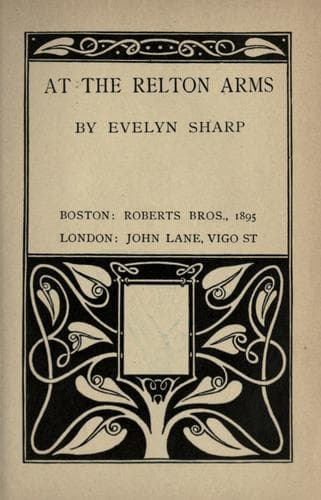
England -- Social life and customs -- 19th century -- Fiction
And when Norah came to stay at Murville Manor, the impression she made
was so pleasing that even the suspicious Digby had to acknowledge his
engagement was at last going right. The Squire liked her because she
never complained when he took her over the biggest duckery in the
village, and because she read the whole of his pamphlet called "How to
make £50 a year out of ducks," without disagreeing with it. Lady Raleigh
liked her because she had always said she would; besides, Norah agreed
that England was the only place for Jack. The boys said she "wasn't bad,
but wanted backing up at times," which was a kindly criticism
considering their bitter disappointment at not having Lady Joan for
their sister-in-law. The girls fell in love with her because they could
not help it; and their old nurse grudgingly allowed that she "couldn't
have been nicer brought up, not if she had been your mamma's own child."
There was something exemplary about Norah which always made her do the
thing that was expected of her at the right moment. She never had a
headache when the boys wanted her to romp with them, she did not hurt
the children's feelings by speaking French before them, she always
wanted music when Helen was going to sing, and she did not obtrude her
affection for the family hero in public. Perhaps this last evidence of
good breeding had more weight with the Raleighs than anything else she
did.
Shortly before the marriage there was a monster reception in the studio
in the West End. All the lady pupils lined the walls, and examined
critically the names on the wedding presents, and wondered enviously
where Norah bought her hats, and manoeuvred anxiously for a few words
with the musician. Mrs. Reginald Routh, in consideration of her being an
invalid, sat in the most comfortable chair in the room, while Lady
Raleigh, on the edge of an extremely straight-backed one, had to listen
to her eulogies of Mr. Digby's music and Mr. Digby himself. The
bride-elect as usual played her part excellently; she made her way
through the toast-racks, and the plated spoons in pale-blue cases, and
the pepper-pots, and the clocks with the musical devices, which were
spread out on little tables all over the room; and she said a few
gracious words to each lady pupil, in which she thanked her for her
particular toast-rack or case of spoons, and hoped she would call after
the marriage on the musician and herself in their flat in Victoria
Street. And she ended her circuit of the room, as was, inevitable,
beside the throne of Mrs. Reginald Routh, where she relieved Lady
Raleigh for a time, and whence she was, from a quick survey of the
attitude of every one present, that there was little chance of being
relieved herself at all.
Public-domain text, read in full here on John Shaqi.
Reviews
Reviews
No reviews yet
Be the first to share your thoughts on this work.
Join the Discussion
Join the discussion
Sign in to leave a comment or review.
Sign InorCreate an account