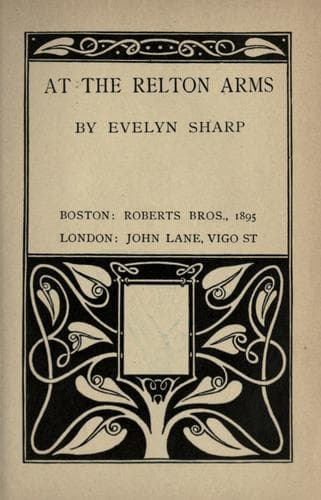
England -- Social life and customs -- 19th century -- Fiction
"Well, what is it?" said the musician, in the peace that ensued on his
wife's departure; and he lighted his cigarette and looked across at Lady
Joan.
"How did you know there was anything?" she asked.
"I always know," he said, in a superior tone; "we haven't been chums all
these years for nothing. Tell me what's up, dear. Hasn't Jack been
writing to you, the scamp?"
"Oh, yes. He always writes. He is quite good. _I_ am the naughty one; I
always have been, I think. I am not fit to be engaged; it is true what I
told you--that day."
They were very fond of making allusions to _that day_; they told
themselves it was one of the privileges of their friendship, now that
_she_ was safely engaged and _he_ was securely married, to mention
subjects which were not always even respectable; it did not occur to
them that this constant renewal of back chapters in their lives had more
to do with their egoism than their friendship.
"And what dreadful thing have you been doing now, please?" asked Digby.
She flung back her head and laughed mockingly, as she used to do.
"Do you remember telling me that marriage was the only way out of it? I
am half inclined to agree with you now, though I wrote to Jack
yesterday to break off our engagement. That is all."
Sonny hummed his baby ditty on the window-seat, without interruption,
for a few seconds.
Then the musician laid down his cigarette.
"You--did--that?" he said, drawing a long breath; "what a wonderful
creature you are, Joan!"
"Only wonderful?" she said lightly; "are you sure you don't mean
heartless?"
"Why did you do it? Do stop laughing," he urged her. Her eyes flashed
angrily.
"What do you mean?" she cried; "do you think I _am_ heartless?"
"Surely not," said the musician, looking along his cigarette, and
avoiding her direct glance across the breakfast-table.
"Then why do you say I am?"
"I--I didn't say so, if you remember, Joan. The word entirely originated
with--"
"Oh, I know," she interrupted impatiently; "but why don't you think so?
You ought to--everybody does--Norah would."
"Norah isn't--Norah can't understand--that is, Norah does not know you
so well as I do, and she is a little prejudiced sometimes--" stumbled
the musician.
"Just so, yes," said Lady Joan, gravely, and there was a pause.
"Then you agree with me that I have done the best thing under the
circumstances, the miserable circumstances?" she began again in a few
moments.
"I always agree with you," said the musician; "but you must own
that--not knowing the circumstances which--which led to your course of
action, it--it becomes difficult--"
He yielded to a nervous desire to laugh instead of finishing his
sentence; and Lady Joan, after a desperate effort to lose her temper,
weakly followed his example.
"Tell me why you did it," he said more naturally when they were grave
again, and he walked round the table and leaned over the back of her
chair. She fell into the rôle of the penitent child.
Public-domain text, read in full here on John Shaqi.
Reviews
Reviews
No reviews yet
Be the first to share your thoughts on this work.
Join the Discussion
Join the discussion
Sign in to leave a comment or review.
Sign InorCreate an account