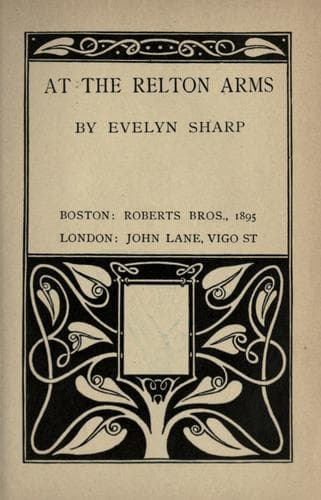
England -- Social life and customs -- 19th century -- Fiction
And, the room having been cleared, as it were, of the heretical element,
the atmosphere of music once more settled down solidly on that studio in
the West End.
CHAPTER II.
Squire Raleigh was a philanthropist. But philanthropy in town is a
costly amusement, and Squire Raleigh had a large family, whose claims
could not comfortably be ignored in favor of charitable institutions,
although a philanthropist with a love for mankind cannot be expected to
do as much for his own children as an ordinary domesticated egoist.
Nevertheless, after the endowment of an orphan asylum, and the failure
of a Liberal newspaper speculation, and the gift of a public park to the
people had been followed by the reduction of his income to one-third of
its original value, the vigorous reformer yielded to the persuasions of
his sons and his lawyers and retired to his country estate, with a
knighthood, a troublesome liver, and a firm resolve to get to the
bottom of the land question.
At Murville Manor, an old Georgian house standing near a quaint little
village in one of the home counties, Sir Marcus Raleigh once more tried
to forget the disagreeable facts of an income with decreasing resources
and a family of increasing claims, and plunged into fresh philanthropic
schemes, this time relating to small holdings, and the growth of
potatoes for the million, and the advancement in general of the
agricultural laborer. Such energy naturally brought the enthusiast into
collision with his own farming tenants, who liked to preserve the
monopoly of grumbling to themselves, and although not hesitating to
complain of the difficulties of making their land pay, yet objected
strongly to having small portions of it wrested from them and given to
their own laborers instead, who throve upon them straightway. It
likewise bred strained relations between the Squire and the old rector,
who in his own way of Sunday-schools, and coal clubs, and relief funds,
was a philanthropist of an old world form, and could not understand why
the traditional supporter of church charities should prefer to invent
charities of his own and allow the church to fall into debt meanwhile.
His family also, who had not inherited philanthropic tendencies, failed
to appreciate the unselfishness of their father in this direction, and
complained with the grossest individualism of the want of pocket money.
They complained, too, of being forced to exchange a town life, where
they could at least sink their father's personality in the oblivion of
society, for a country one, where it was impossible to remain unknown
for miles round, where philanthropy was cheap and therefore more rife
than before, and where a large staff of men-servants was replaced by a
so-called handy man. The handy man, by the way, in spite of advertising
himself in the county paper as competent to look after "pony, cart,
garden, boots, knives, fifteen shillings a week, Sundays, and beer,"
Public-domain text, read in full here on John Shaqi.
Reviews
Reviews
No reviews yet
Be the first to share your thoughts on this work.
Join the Discussion
Join the discussion
Sign in to leave a comment or review.
Sign InorCreate an account