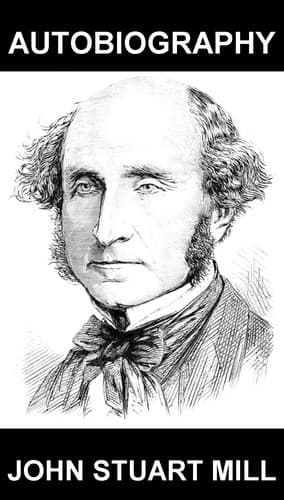
Mill, John Stuart, 1806-1873; Philosophers -- England -- Biography
I had been long an ardent admirer of Comte's writings before I had any
communication with himself; nor did I ever, to the last, see him in the
body. But for some years we were frequent correspondents, until our
correspondence became controversial, and our zeal cooled. I was the
first to slacken correspondence; he was the first to drop it. I found,
and he probably found likewise, that I could do no good to his mind, and
that all the good he could do to mine, he did by his books. This would
never have led to discontinuance of intercourse, if the differences
between us had been on matters of simple doctrine. But they were chiefly
on those points of opinion which blended in both of us with our
strongest feelings, and determined the entire direction of our
aspirations. I had fully agreed with him when he maintained that the
mass of mankind, including even their rulers in all the practical
departments of life, must, from the necessity of the case, accept most
of their opinions on political and social matters, as they do on
physical, from the authority of those who have bestowed more study on
those subjects than they generally have it in their power to do. This
lesson had been strongly impressed on me by the early work of Comte, to
which I have adverted. And there was nothing in his great Treatise which
I admired more than his remarkable exposition of the benefits which the
nations of modern Europe have historically derived from the separation,
during the Middle Ages, of temporal and spiritual power, and the
distinct organization of the latter. I agreed with him that the moral
and intellectual ascendancy, once exercised by priests, must in time
pass into the hands of philosophers, and will naturally do so when they
become sufficiently unanimous, and in other respects worthy to possess
it. But when he exaggerated this line of thought into a practical
system, in which philosophers were to be organized into a kind of
corporate hierarchy, invested with almost the same spiritual supremacy
(though without any secular power) once possessed by the Catholic
Church; when I found him relying on this spiritual authority as the only
security for good government, the sole bulwark against practical
oppression, and expecting that by it a system of despotism in the state
and despotism in the family would be rendered innocuous and beneficial;
it is not surprising, that while as logicians we were nearly at one, as
sociologists we could travel together no further. M. Comte lived to
carry out these doctrines to their extremest consequences, by planning,
in his last work, the _Système de Politique Positive_, the completest
system of spiritual and temporal despotism which ever yet emanated from
a human brain, unless possibly that of Ignatius Loyola: a system by
which the yoke of general opinion, wielded by an organized body of
spiritual teachers and rulers, would be made supreme over every action,
and as far as is in human possibility, every thought, of every member of
Public-domain text, read in full here on John Shaqi.
Reviews
Reviews
No reviews yet
Be the first to share your thoughts on this work.
Elsewhere in the archive
Join the Discussion
Join the discussion
Sign in to leave a comment or review.
Sign InorCreate an account