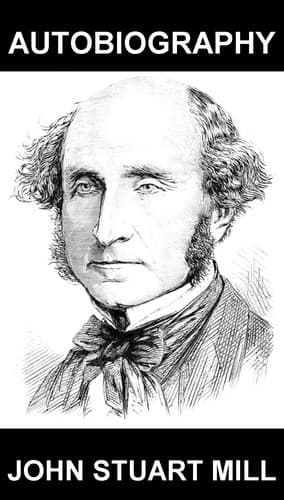
Mill, John Stuart, 1806-1873; Philosophers -- England -- Biography
the community, as well in the things which regard only himself, as in
those which concern the interests of others. It is but just to say that
this work is a considerable improvement, in many points of feeling, over
Comte's previous writings on the same subjects: but as an accession to
social philosophy, the only value it seems to me to possess, consists in
putting an end to the notion that no effectual moral authority can be
maintained over society without the aid of religious belief; for Comte's
work recognises no religion except that of Humanity, yet it leaves an
irresistible conviction that any moral beliefs concurred in by the
community generally may be brought to bear upon the whole conduct and
lives of its individual members, with an energy and potency truly
alarming to think of. The book stands a monumental warning to thinkers
on society and politics, of what happens when once men lose sight, in
their speculations, of the value of Liberty and of Individuality.
To return to myself. The _Review_ engrossed, for some time longer,
nearly all the time I could devote to authorship, or to thinking with
authorship in view. The articles from the _London and Westminster
Review_ which are reprinted in the _Dissertations_, are scarcely a
fourth part of those I wrote. In the conduct of the _Review_ I had two
principal objects. One was to free philosophic radicalism from the
reproach of sectarian Benthamism. I desired, while retaining the
precision of expression, the definiteness of meaning, the contempt of
declamatory phrases and vague generalities, which were so honourably
characteristic both of Bentham and of my father, to give a wider basis
and a more free and genial character to Radical speculations; to show
that there was a Radical philosophy, better and more complete than
Bentham's, while recognizing and incorporating all of Bentham's which is
permanently valuable. In this first object I, to a certain extent,
succeeded. The other thing I attempted, was to stir up the educated
Radicals, in and out of Parliament, to exertion, and induce them to make
themselves, what I thought by using the proper means they might become
--a powerful party capable of taking the government of the country, or
at least of dictating the terms on which they should share it with the
Whigs. This attempt was from the first chimerical: partly because the
time was unpropitious, the Reform fervour being in its period of ebb,
and the Tory influences powerfully rallying; but still more, because, as
Austin so truly said, "the country did not contain the men." Among the
Radicals in Parliament there were several qualified to be useful members
of an enlightened Radical party, but none capable of forming and leading
such a party. The exhortations I addressed to them found no response.
One occasion did present itself when there seemed to be room for a bold
and successful stroke for Radicalism. Lord Durham had left the ministry,
Public-domain text, read in full here on John Shaqi.
Reviews
Reviews
No reviews yet
Be the first to share your thoughts on this work.
Elsewhere in the archive
Join the Discussion
Join the discussion
Sign in to leave a comment or review.
Sign InorCreate an account