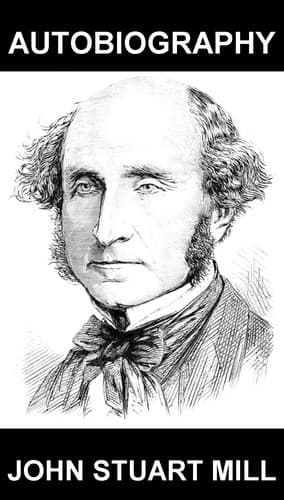
Mill, John Stuart, 1806-1873; Philosophers -- England -- Biography
One of the evils most liable to attend on any sort of early proficiency,
and which often fatally blights its promise, my father most anxiously
guarded against. This was self-conceit. He kept me, with extreme
vigilance, out of the way of hearing myself praised, or of being led
to make self-flattering comparisons between myself and others. From
his own intercourse with me I could derive none but a very humble
opinion of myself; and the standard of comparison he always held up to
me, was not what other people did, but what a man could and ought to
do. He completely succeeded in preserving me from the sort of influences
he so much dreaded. I was not at all aware that my attainments were
anything unusual at my age. If I accidentally had my attention drawn to
the fact that some other boy knew less than myself--which happened less
often than might be imagined--I concluded, not that I knew much, but that
he, for some reason or other, knew little, or that his knowledge was of
a different kind from mine. My state of mind was not humility, but neither
was it arrogance. I never thought of saying to myself, I am, or I can do,
so and so. I neither estimated myself highly nor lowly: I did not estimate
myself at all. If I thought anything about myself, it was that I was
rather backward in my studies, since I always found myself so, in
comparison with what my father expected from me. I assert this with
confidence, though it was not the impression of various persons who saw
me in my childhood. They, as I have since found, thought me greatly and
disagreeably self-conceited; probably because I was disputatious, and did
not scruple to give direct contradictions to things which I heard said.
I suppose I acquired this bad habit from having been encouraged in an
unusual degree to talk on matters beyond my age, and with grown persons,
while I never had inculcated on me the usual respect for them. My father
did not correct this ill-breeding and impertinence, probably from not
being aware of it, for I was always too much in awe of him to be otherwise
than extremely subdued and quiet in his presence. Yet with all this I had
no notion of any superiority in myself; and well was it for me that I had
not. I remember the very place in Hyde Park where, in my fourteenth year,
on the eve of leaving my father's house for a long absence, he told me
that I should find, as I got acquainted with new people, that I had been
taught many things which youths of my age did not commonly know; and that
many persons would be disposed to talk to me of this, and to compliment
me upon it. What other things he said on this topic I remember very
imperfectly; but he wound up by saying, that whatever I knew more than
others, could not be ascribed to any merit in me, but to the very unusual
advantage which had fallen to my lot, of having a father who was able to
teach me, and willing to give the necessary trouble and time; that it was
Public-domain text, read in full here on John Shaqi.
Reviews
Reviews
No reviews yet
Be the first to share your thoughts on this work.
Join the Discussion
Join the discussion
Sign in to leave a comment or review.
Sign InorCreate an account