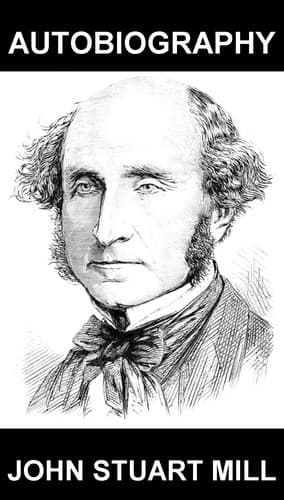
Mill, John Stuart, 1806-1873; Philosophers -- England -- Biography
dogmatic atheism he looked upon as absurd; as most of those, whom the
world has considered Atheists, have always done. These particulars are
important, because they show that my father's rejection of all that is
called religious belief, was not, as many might suppose, primarily a
matter of logic and evidence: the grounds of it were moral, still more
than intellectual. He found it impossible to believe that a world so
full of evil was the work of an Author combining infinite power with
perfect goodness and righteousness. His intellect spurned the
subtleties by which men attempt to blind themselves to this open
contradiction. The Sabaean, or Manichaean theory of a Good and an Evil
Principle, struggling against each other for the government of the
universe, he would not have equally condemned; and I have heard him
express surprise, that no one revived it in our time. He would have
regarded it as a mere hypothesis; but he would have ascribed to it no
depraving influence. As it was, his aversion to religion, in the sense
usually attached to the term, was of the same kind with that of
Lucretius: he regarded it with the feelings due not to a mere mental
delusion, but to a great moral evil. He looked upon it as the greatest
enemy of morality: first, by setting up fictitious excellences--belief
in creeds, devotional feelings, and ceremonies, not connected with the
good of human-kind--and causing these to be accepted as substitutes
for genuine virtues: but above all, by radically vitiating the
standard of morals; making it consist in doing the will of a being,
on whom it lavishes indeed all the phrases of adulation, but whom in
sober truth it depicts as eminently hateful. I have a hundred times
heard him say that all ages and nations have represented their gods as
wicked, in a constantly increasing progression; that mankind have gone
on adding trait after trait till they reached the most perfect
conception of wickedness which the human mind can devise, and have
called this God, and prostrated themselves before it. This _ne plus
ultra_ of wickedness he considered to be embodied in what is commonly
presented to mankind as the creed of Christianity. Think (he used to
say) of a being who would make a Hell--who would create the human race
with the infallible foreknowledge, and therefore with the intention,
that the great majority of them were to be consigned to horrible and
everlasting torment. The time, I believe, is drawing near when this
dreadful conception of an object of worship will be no longer
identified with Christianity; and when all persons, with any sense of
moral good and evil, will look upon it with the same indignation with
which my father regarded it. My father was as well aware as anyone
that Christians do not, in general, undergo the demoralizing
consequences which seem inherent in such a creed, in the manner or
to the extent which might have been expected from it. The same
slovenliness of thought, and subjection of the reason to fears,
Public-domain text, read in full here on John Shaqi.
Reviews
Reviews
No reviews yet
Be the first to share your thoughts on this work.
Join the Discussion
Join the discussion
Sign in to leave a comment or review.
Sign InorCreate an account