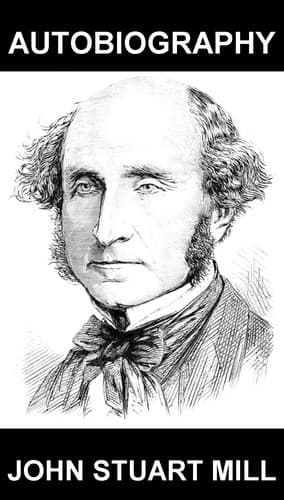
Mill, John Stuart, 1806-1873; Philosophers -- England -- Biography
The experiences of this period had two very marked effects on my opinions
and character. In the first place, they led me to adopt a theory of life,
very unlike that on which I had before I acted, and having much in common
with what at that time I certainly had never heard of, the anti-self-
consciousness theory of Carlyle. I never, indeed, wavered in the conviction
that happiness is the test of all rules of conduct, and the end of life.
But I now thought that this end was only to be attained by not making it
the direct end. Those only are happy (I thought) who have their minds
fixed on some object other than their own happiness; on the happiness of
others, on the improvement of mankind, even on some art or pursuit,
followed not as a means, but as itself an ideal end. Aiming thus at
something else, they find happiness by the way. The enjoyments of life
(such was now my theory) are sufficient to make it a pleasant thing,
when they are taken _en passant_, without being made a principal object.
Once make them so, and they are immediately felt to be insufficient.
They will not bear a scrutinizing examination. Ask yourself whether you
are happy, and you cease to be so. The only chance is to treat, not
happiness, but some end external to it, as the purpose of life. Let your
self-consciousness, your scrutiny, your self-interrogation, exhaust
themselves on that; and if otherwise fortunately circumstanced you will
inhale happiness with the air you breathe, without dwelling on it or
thinking about it, without either forestalling it in imagination, or
putting it to flight by fatal questioning. This theory now became the
basis of my philosophy of life. And I still hold to it as the best
theory for all those who have but a moderate degree of sensibility and
of capacity I for enjoyment; that is, for the great majority of mankind.
The other important change which my opinions at this time underwent, was
that I, for the first time, gave its proper place, among the prime
necessities of human well-being, to the internal culture of the
individual. I ceased to attach almost exclusive importance to the
ordering of outward circumstances, and the training of the human being
for speculation and for action.
Public-domain text, read in full here on John Shaqi.
Reviews
Reviews
No reviews yet
Be the first to share your thoughts on this work.
Elsewhere in the archive
Join the Discussion
Join the discussion
Sign in to leave a comment or review.
Sign InorCreate an account