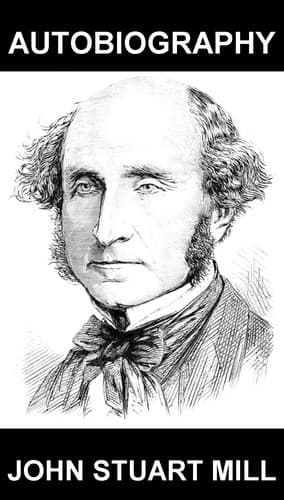
Mill, John Stuart, 1806-1873; Philosophers -- England -- Biography
I had now learnt by experience that the passing susceptibilities needed
to be cultivated as well as the active capacities, and required to be
nourished and enriched as well as guided. I did not, for an instant,
lose sight of, or undervalue, that part of the truth which I had seen
before; I never turned recreant to intellectual culture, or ceased to
consider the power and practice of analysis as an essential condition
both of individual and of social improvement But 1 thought that it had
consequences which required to be corrected, by joining other kinds of
cultivation with it. The maintenance of a due balance among the
faculties now seemed to be of primary importance. The cultivation of the
feelings became one of the cardinal points in my ethical and philosophical
creed. And my thoughts and inclinations turned in an increasing degree
towards whatever seemed capable of being instrumental to that object.
I now began to find meaning in the things, which I had read or heard
about the importance of poetry and art as instruments of human culture.
But it was some time longer before I began to know this by personal
experience. The only one of the imaginative arts in which I had from
childhood taken great pleasure, was music; the best effect of which (and
in this it surpasses perhaps every other art) consists in exciting
enthusiasm; in winding up to a high pitch those feelings of an elevated
kind which are already in the character, but to which this excitement
gives a glow and a fervour, which, though transitory at its utmost
height, is precious for sustaining them at other times. This effect of
music I had often experienced; but, like all my pleasurable
susceptibilities, it was suspended during the gloomy period. I had
sought relief again and again from this quarter, but found none. After
the tide had turned, and I was in process of recovery, I had been helped
forward by music, but in a much less elevated manner. I at this time
first became acquainted with Weber's _Oberon_, and the extreme pleasure
which I drew from its delicious melodies did me good by showing me a
source of pleasure to which I was as susceptible as ever. The good,
however, was much impaired by the thought that the pleasure of music
(as is quite true of such pleasure as this was, that of mere tune) fades
with familiarity, and requires either to be revived by intermittence, or
fed by continual novelty. And it is very characteristic both of my then
state, and of the general tone of my mind at this period of my life,
that I was seriously tormented by the thought of the exhaustibility of
musical combinations. The octave consists only of five tones and two
semi-tones, which can be put together in only a limited number of ways,
of which but a small proportion are beautiful: most of these, it seemed
to me, must have been already discovered, and there could not be room
for a long succession of Mozarts and Webers, to strike out, as these had
Public-domain text, read in full here on John Shaqi.
Reviews
Reviews
No reviews yet
Be the first to share your thoughts on this work.
Elsewhere in the archive
Join the Discussion
Join the discussion
Sign in to leave a comment or review.
Sign InorCreate an account