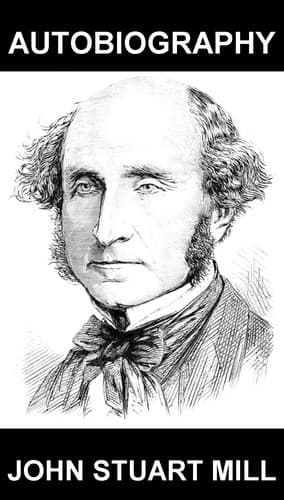
Mill, John Stuart, 1806-1873; Philosophers -- England -- Biography
done, entirely new and surpassingly rich veins of musical beauty. This
source of anxiety may, perhaps, be thought to resemble that of the
philosophers of Laputa, who feared lest the sun should be burnt out. It
was, however, connected with the best feature in my character, and the
only good point to be found in my very unromantic and in no way
honourable distress. For though my dejection, honestly looked at, could
not be called other than egotistical, produced by the ruin, as I thought,
of my fabric of happiness, yet the destiny of mankind in general was ever
in my thoughts, and could not be separated from my own. I felt that the
flaw in my life, must be a flaw in life itself; that the question was,
whether, if the reformers of society and government could succeed in
their objects, and every person in the community were free and in a state
of physical comfort, the pleasures of life, being no longer kept up by
struggle and privation, would cease to be pleasures. And I felt that
unless I could see my way to some better hope than this for human
happiness in general, my dejection must continue; but that if I could
see such an outlet, I should then look on the world with pleasure;
content, as far as I was myself concerned, with any fair share of the
general lot.
This state of my thoughts and feelings made the fact of my reading
Wordsworth for the first time (in the autumn of 1828), an important
event of my life. I took up the collection of his poems from curiosity,
with no expectation of mental relief from it, though I had before
resorted to poetry with that hope. In the worst period of my depression,
I had read through the whole of Byron (then new to me), to try whether a
poet, whose peculiar department was supposed to be that of the intenser
feelings, could rouse any feeling in me. As might be expected, I got no
good from this reading, but the reverse. The poet's state of mind was
too like my own. His was the lament of a man who had worn out all
pleasures, and who seemed to think that life, to all who possess the
good things of it, must necessarily be the vapid, uninteresting thing
which I found it. His Harold and Manfred had the same burden on them
which I had; and I was not in a frame of mind to desire any comfort from
the vehement sensual passion of his Giaours, or the sullenness of his
Laras. But while Byron was exactly what did not suit my condition,
Wordsworth was exactly what did. I had looked into the _Excursion_ two
or three years before, and found little in it; and I should probably
have found as little, had I read it at this time. But the miscellaneous
poems, in the two-volume edition of 1815 (to which little of value was
added in the latter part of the author's life), proved to be the precise
thing for my mental wants at that particular juncture.
Public-domain text, read in full here on John Shaqi.
Reviews
Reviews
No reviews yet
Be the first to share your thoughts on this work.
Elsewhere in the archive
Join the Discussion
Join the discussion
Sign in to leave a comment or review.
Sign InorCreate an account