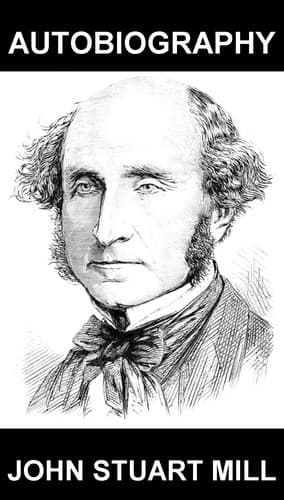
Mill, John Stuart, 1806-1873; Philosophers -- England -- Biography
But though these exercises in history were never a compulsory lesson,
there was another kind of composition which was so, namely, writing
verses, and it was one of the most disagreeable of my tasks. Greek
and Latin verses I did not write, nor learnt the prosody of those
languages. My father, thinking this not worth the time it required,
contented himself with making me read aloud to him, and correcting
false quantities. I never composed at all in Greek, even in prose, and
but little in Latin. Not that my father could be indifferent to the
value of this practice, in giving a thorough knowledge of these
languages, but because there really was not time for it. The verses
I was required to write were English. When I first read Pope's Homer,
I ambitiously attempted to compose something of the same kind, and
achieved as much as one book of a continuation of the _Iliad_. There,
probably, the spontaneous promptings of my poetical ambition would
have stopped; but the exercise, begun from choice, was continued by
command. Conformably to my father's usual practice of explaining to
me, as far as possible, the reasons for what he required me to do,
he gave me, for this, as I well remember, two reasons highly
characteristic of him: one was, that some things could be expressed
better and more forcibly in verse than in prose: this, he said, was
a real advantage. The other was, that people in general attached more
value to verse than it deserved, and the power of writing it, was, on
this account, worth acquiring. He generally left me to choose my own
subjects, which, as far as I remember, were mostly addresses to some
mythological personage or allegorical abstraction; but he made me
translate into English verse many of Horace's shorter poems: I also
remember his giving me Thomson's _Winter_ to read, and afterwards
making me attempt (without book) to write something myself on the same
subject. The verses I wrote were, of course, the merest rubbish, nor
did I ever attain any facility of versification, but the practice may
have been useful in making it easier for me, at a later period, to
acquire readiness of expression.[1] I had read, up to this time, very
little English poetry. Shakspeare my father had put into my hands,
chiefly for the sake of the historical plays, from which, however,
I went on to the others. My father never was a great admirer of
Shakspeare, the English idolatry of whom he used to attack with some
severity. He cared little for any English poetry except Milton (for
whom he had the highest admiration), Goldsmith, Burns, and Gray's
_Bard_, which he preferred to his Elegy: perhaps I may add Cowper and
Beattie. He had some value for Spenser, and I remember his reading to
me (unlike his usual practice of making me read to him) the first book
of the _Fairie Queene_; but I took little pleasure in it. The poetry
of the present century he saw scarcely any merit in, and I hardly
became acquainted with any of it till I was grown up to manhood,
Public-domain text, read in full here on John Shaqi.
Reviews
Reviews
No reviews yet
Be the first to share your thoughts on this work.
Join the Discussion
Join the discussion
Sign in to leave a comment or review.
Sign InorCreate an account