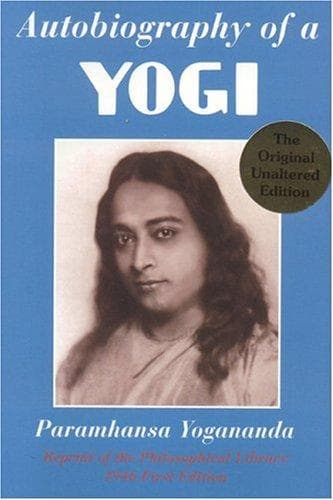
Yogananda, Paramahansa, 1893-1952; Yogis -- India -- Biography
Matches are played in India with kites whose strings are covered
with glue and ground glass. Each player attempts to sever the string
of his opponent. A freed kite sails over the roofs; there is great
fun in catching it. Inasmuch as Uma and I were on the balcony, it
seemed impossible that any loosed kite could come into our hands;
its string would naturally dangle over the roofs.
The players across the lane began their match. One string was cut;
immediately the kite floated in my direction. It was stationary
for a moment, through sudden abatement of breeze, which sufficed
to firmly entangle the string with a cactus plant on top of the
opposite house. A perfect loop was formed for my seizure. I handed
the prize to Uma.
“It was just an extraordinary accident, and not an answer to your
prayer. If the other kite comes to you, then I shall believe.”
Sister’s dark eyes conveyed more amazement than her words.
I continued my prayers with a crescendo intensity. A forcible tug
by the other player resulted in the abrupt loss of his kite. It
headed toward me, dancing in the wind. My helpful assistant, the
cactus plant, again secured the kite string in the necessary loop
by which I could grasp it. I presented my second trophy to Uma.
“Indeed, Divine Mother listens to you! This is all too uncanny for
me!” Sister bolted away like a frightened fawn.
{FN1-2} Spiritual teacher; from Sanskrit root GUR, to raise, to
uplift.
{FN1-3} A practitioner of yoga, “union,” ancient Indian science of
meditation on God.
{FN1-4} My name was changed to Yogananda when I entered the ancient
monastic Swami Order in 1914. My guru bestowed the religious title
of PARAMHANSA on me in 1935 (see ../chapters 24 and 42).
{FN1-5} Traditionally, the second caste of warriors and rulers.
{FN1-6} These ancient epics are the hoard of India’s history,
mythology, and philosophy. An “Everyman’s Library” volume, RAMAYANA
AND MAHABHARATA, is a condensation in English verse by Romesh Dutt
(New York: E. P. Dutton).
{FN1-7} This noble Sanskrit poem, which occurs as part of the
MAHABHARATA epic, is the Hindu Bible. The most poetical English
translation is Edwin Arnold’s THE SONG CELESTIAL (Philadelphia:
David McKay, 75 cents). One of the best translations with detailed
commentary is Sri Aurobindo’s MESSAGE OF THE GITA (Jupiter Press,
16 Semudoss St., Madras, India, $3.50).
{FN1-8} BABU (Mister) is placed in Bengali names at the end.
{FN1-9} The phenomenal powers possessed by great masters are
explained in chapter 30, “The Law of Miracles.”
{FN1-10} A yogic technique whereby the sensory tumult is stilled,
permitting man to achieve an ever-increasing identity with cosmic
consciousness. (See p. 243.)
{FN1-11} A Sanskrit name for God as Ruler of the universe; from
the root IS, to rule. There are 108 names for God in the Hindu
scriptures, each one carrying a different shade of philosophical
meaning.
Public-domain text, read in full here on John Shaqi.
Reviews
Reviews
No reviews yet
Be the first to share your thoughts on this work.
Join the Discussion
Join the discussion
Sign in to leave a comment or review.
Sign InorCreate an account