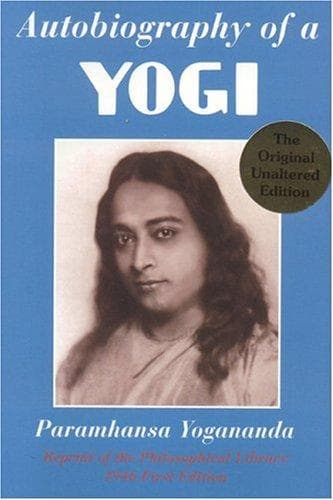
Yogananda, Paramahansa, 1893-1952; Yogis -- India -- Biography
“Awaken your father!” Her voice was only a whisper. “Take the first
available train, at four o’clock this morning. Rush to Calcutta if
you would see me!” The wraithlike figure vanished.
“Father, Father! Mother is dying!” The terror in my tone aroused
him instantly. I sobbed out the fatal tidings.
“Never mind that hallucination of yours.” Father gave his characteristic
negation to a new situation. “Your mother is in excellent health.
If we get any bad news, we shall leave tomorrow.”
“You shall never forgive yourself for not starting now!” Anguish
caused me to add bitterly, “Nor shall I ever forgive you!”
The melancholy morning came with explicit words: “Mother dangerously
ill; marriage postponed; come at once.”
Father and I left distractedly. One of my uncles met us en route
at a transfer point. A train thundered toward us, looming with
telescopic increase. From my inner tumult, an abrupt determination
arose to hurl myself on the railroad tracks. Already bereft, I
felt, of my mother, I could not endure a world suddenly barren to
the bone. I loved Mother as my dearest friend on earth. Her solacing
black eyes had been my surest refuge in the trifling tragedies of
childhood.
“Does she yet live?” I stopped for one last question to my uncle.
“Of course she is alive!” He was not slow to interpret the desperation
in my face. But I scarcely believed him.
When we reached our Calcutta home, it was only to confront the
stunning mystery of death. I collapsed into an almost lifeless
state. Years passed before any reconciliation entered my heart.
Storming the very gates of heaven, my cries at last summoned the
Divine Mother. Her words brought final healing to my suppurating
wounds:
“It is I who have watched over thee, life after life, in the
tenderness of many mothers! See in My gaze the two black eyes, the
lost beautiful eyes, thou seekest!”
Father and I returned to Bareilly soon after the crematory
rites for the well-beloved. Early every morning I made a pathetic
memorial—pilgrimage to a large SHEOLI tree which shaded the
smooth, green-gold lawn before our bungalow. In poetical moments,
I thought that the white SHEOLI flowers were strewing themselves
with a willing devotion over the grassy altar. Mingling tears with
the dew, I often observed a strange other-worldly light emerging
from the dawn. Intense pangs of longing for God assailed me. I felt
powerfully drawn to the Himalayas.
One of my cousins, fresh from a period of travel in the holy hills,
visited us in Bareilly. I listened eagerly to his tales about the
high mountain abode of yogis and swamis. {FN2-1}
“Let us run away to the Himalayas.” My suggestion one day to
Dwarka Prasad, the young son of our landlord in Bareilly, fell on
unsympathetic ears. He revealed my plan to my elder brother, who
had just arrived to see Father. Instead of laughing lightly over
this impractical scheme of a small boy, Ananta made it a definite
point to ridicule me.
Public-domain text, read in full here on John Shaqi.
Reviews
Reviews
No reviews yet
Be the first to share your thoughts on this work.
Join the Discussion
Join the discussion
Sign in to leave a comment or review.
Sign InorCreate an account