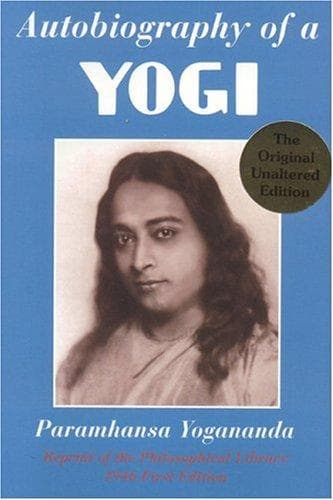
Yogananda, Paramahansa, 1893-1952; Yogis -- India -- Biography
“It is a thankless task, sir,” I answered. “No matter what the
leader does or does not, he is criticized.”
“Do you want the whole divine CHANNA (milk curd) for yourself alone?”
My guru’s retort was accompanied by a stern glance. “Could you or
anyone else achieve God-contact through yoga if a line of generous-hearted
masters had not been willing to convey their knowledge to others?”
He added, “God is the Honey, organizations are the hives; both are
necessary. Any FORM is useless, of course, without the spirit, but
why should you not start busy hives full of the spiritual nectar?”
His counsel moved me deeply. Although I made no outward reply, an
adamant resolution arose in my breast: I would share with my fellows,
so far as lay in my power, the unshackling truths I had learned at
my guru’s feet. “Lord,” I prayed, “may Thy Love shine forever on
the sanctuary of my devotion, and may I be able to awaken that Love
in other hearts.”
On a previous occasion, before I had joined the monastic order,
Sri Yukteswar had made a most unexpected remark.
“How you will miss the companionship of a wife in your old age!” he
had said. “Do you not agree that the family man, engaged in useful
work to maintain his wife and children, thus plays a rewarding role
in God’s eyes?”
“Sir,” I had protested in alarm, “you know that my desire in this
life is to espouse only the Cosmic Beloved.”
Master had laughed so merrily that I understood his observation
was made merely as a test of my faith.
“Remember,” he had said slowly, “that he who discards his worldly
duties can justify himself only by assuming some kind of responsibility
toward a much larger family.”
The ideal of an all-sided education for youth had always been close
to my heart. I saw clearly the arid results of ordinary instruction,
aimed only at the development of body and intellect. Moral and
spiritual values, without whose appreciation no man can approach
happiness, were yet lacking in the formal curriculum. I determined to
found a school where young boys could develop to the full stature
of manhood. My first step in that direction was made with seven
children at Dihika, a small country site in Bengal.
A year later, in 1918, through the generosity of Sir Manindra
Chandra Nundy, the Maharaja of Kasimbazar, I was able to transfer my
fast-growing group to Ranchi. This town in Bihar, about two hundred
miles from Calcutta, is blessed with one of the most healthful
climates in India. The Kasimbazar Palace at Ranchi was transformed
into the headquarters for the new school, which I called BRAHMACHARYA
VIDYALAYA {FN27-1} in accordance with the educational ideals
of the rishis. Their forest ashrams had been the ancient seats of
learning, secular and divine, for the youth of India.
Public-domain text, read in full here on John Shaqi.
Reviews
Reviews
No reviews yet
Be the first to share your thoughts on this work.
Elsewhere in the archive
Join the Discussion
Join the discussion
Sign in to leave a comment or review.
Sign InorCreate an account