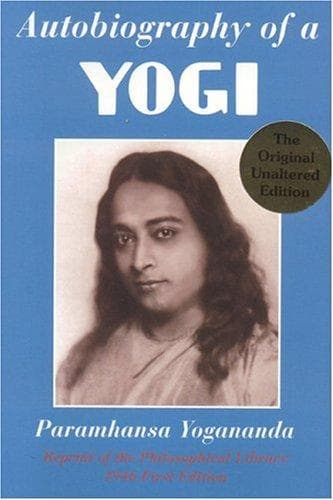
Yogananda, Paramahansa, 1893-1952; Yogis -- India -- Biography
At Ranchi I organized an educational program for both grammar
and high school grades. It included agricultural, industrial,
commercial, and academic subjects. The students were also taught
yoga concentration and meditation, and a unique system of physical
development, “Yogoda,” whose principles I had discovered in 1916.
Realizing that man’s body is like an electric battery, I reasoned
that it could be recharged with energy through the direct agency of
the human will. As no action, slight or large, is possible without
WILLING, man can avail himself of his prime mover, will, to renew
his bodily tissues without burdensome apparatus or mechanical
exercises. I therefore taught the Ranchi students my simple “Yogoda”
techniques by which the life force, centred in man’s medulla
oblongata, can be consciously and instantly recharged from the
unlimited supply of cosmic energy.
[Illustration: Central building of the Yogoda Sat-Sanga Brahmacharya
Vidyalaya at Ranchi, Bihar, established in 1918 as a yoga school
for boys, with grammar and high school education. Connected with
it is the philanthropic Lahiri Mahasaya Mission.—see ranchi.jpg]
The boys responded wonderfully to this training, developing
extraordinary ability to shift the life energy from one part of
the body to another part, and to sit in perfect poise in difficult
body postures. {FN27-2} They performed feats of strength and
endurance which many powerful adults could not equal. My youngest
brother, Bishnu Charan Ghosh, joined the Ranchi school; he later
became a leading physical culturist in Bengal. He and one of his
students traveled to Europe and America, giving exhibitions of
strength and skill which amazed the university savants, including
those at Columbia University in New York.
At the end of the first year at Ranchi, applications for admission
reached two thousand. But the school, which at that time was solely
residential, could accommodate only about one hundred. Instruction
for day students was soon added.
In the VIDYALAYA I had to play father-mother to the little children,
and to cope with many organizational difficulties. I often remembered
Christ’s words: “Verily I say unto you, There is no man that hath
left house, or brethren or sisters, or father, or mother, or wife,
or children, or lands, for my sake, and the gospel’s, but he shall
receive an hundredfold now in this time, houses and brethren, and
sisters, and mothers, and children, and lands, with persecutions;
and in the world to come eternal life.” {FN27-3} Sri Yukteswar had
interpreted these words: “The devotee who forgoes the life-experiences
of marriage and family, and exchanges the problems of a small
household and limited activities for the larger responsibilities
of service to society in general, is undertaking a task which is
often accompanied by persecution from a misunderstanding world,
but also by a divine inner contentment.”
Public-domain text, read in full here on John Shaqi.
Reviews
Reviews
No reviews yet
Be the first to share your thoughts on this work.
Elsewhere in the archive
Join the Discussion
Join the discussion
Sign in to leave a comment or review.
Sign InorCreate an account