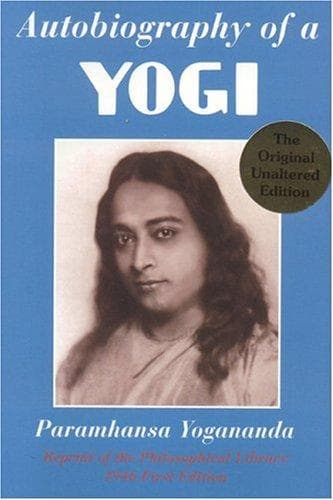
Yogananda, Paramahansa, 1893-1952; Yogis -- India -- Biography
{FN28-1} The will, projected from the point between the eyebrows,
is known by yogis as the broadcasting apparatus of thought. When the
feeling is calmly concentrated on the heart, it acts as a mental
radio, and can receive the messages of others from far or near.
In telepathy the fine vibrations of thoughts in one person’s mind
are transmitted through the subtle vibrations of astral ether and
then through the grosser earthly ether, creating electrical waves
which, in turn, translate themselves into thought waves in the mind
of the other person.
{FN28-2} Every soul in its pure state is omniscient. Kashi’s soul
remembered all the characteristics of Kashi, the boy, and therefore
mimicked his hoarse voice in order to stir my recognition.
{FN28-3} Prokash Das is the present director of our Yogoda Math
(hermitage) at Dakshineswar in Bengal.
CHAPTER: 29
RABINDRANATH TAGORE AND I COMPARE SCHOOLS
“Rabindranath Tagore taught us to sing, as a natural form of
self-expression, like the birds.”
Bhola Nath, a bright fourteen-year-old lad at my Ranchi school,
gave me this explanation after I had complimented him one morning
on his melodious outbursts. With or without provocation, the boy
poured forth a tuneful stream. He had previously attended the famous
Tagore school of “Santiniketan” (Haven of Peace) at Bolpur.
“The songs of Rabindranath have been on my lips since early youth,”
I told my companion. “All Bengal, even the unlettered peasants,
delights in his lofty verse.”
Bhola and I sang together a few refrains from Tagore, who has set
to music thousands of Indian poems, some original and others of
hoary antiquity.
“I met Rabindranath soon after he had received the Nobel Prize
for literature,” I remarked after our vocalizing. “I was drawn to
visit him because I admired his undiplomatic courage in disposing
of his literary critics.” I chuckled.
Bhola curiously inquired the story.
“The scholars severely flayed Tagore for introducing a new style
into Bengali poetry,” I began. “He mixed colloquial and classical
expressions, ignoring all the prescribed limitations dear to
the pundits’ hearts. His songs embody deep philosophic truth in
emotionally appealing terms, with little regard for the accepted
literary forms.
“One influential critic slightingly referred to Rabindranath
as a ‘pigeon-poet who sold his cooings in print for a rupee.’ But
Tagore’s revenge was at hand; the whole Western world paid homage
at his feet soon after he had translated into English his GITANJALI
(‘Song Offerings’). A trainload of pundits, including his one-time
critics, went to Santiniketan to offer their congratulations.
“Rabindranath received his guests only after an intentionally long
delay, and then heard their praise in stoic silence. Finally he
turned against them their own habitual weapons of criticism.
Public-domain text, read in full here on John Shaqi.
Reviews
Reviews
No reviews yet
Be the first to share your thoughts on this work.
Elsewhere in the archive
Join the Discussion
Join the discussion
Sign in to leave a comment or review.
Sign InorCreate an account