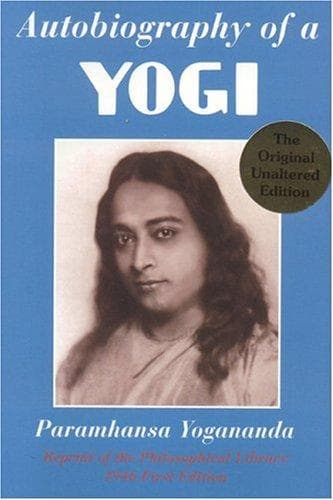
Yogananda, Paramahansa, 1893-1952; Yogis -- India -- Biography
“‘Gentlemen,’ he said, ‘the fragrant honors you here bestow are
incongruously mingled with the putrid odors of your past contempt.
Is there possibly any connection between my award of the Nobel
Prize, and your suddenly acute powers of appreciation? I am still
the same poet who displeased you when I first offered my humble
flowers at the shrine of Bengal.’
“The newspapers published an account of the bold chastisement given
by Tagore. I admired the outspoken words of a man unhypnotized by
flattery,” I went on. “I was introduced to Rabindranath in Calcutta
by his secretary, Mr. C. F. Andrews, {FN29-1} who was simply attired
in a Bengali DHOTI. He referred lovingly to Tagore as his GURUDEVA.
“Rabindranath received me graciously. He emanated a soothing aura
of charm, culture, and courtliness. Replying to my question about
his literary background, Tagore told me that one ancient source of
his inspiration, besides our religious epics, had been the classical
poet, Bidyapati.”
Inspired by these memories, I began to sing Tagore’s version of an
old Bengali song, “Light the Lamp of Thy Love.” Bhola and I chanted
joyously as we strolled over the VIDYALAYA grounds.
About two years after founding the Ranchi school, I received an
invitation from Rabindranath to visit him at Santiniketan in order
to discuss our educational ideals. I went gladly. The poet was
seated in his study when I entered; I thought then, as at our first
meeting, that he was as striking a model of superb manhood as any
painter could desire. His beautifully chiseled face, nobly patrician,
was framed in long hair and flowing beard. Large, melting eyes; an
angelic smile; and a voice of flutelike quality which was literally
enchanting. Stalwart, tall, and grave, he combined an almost
womanly tenderness with the delightful spontaneity of a child. No
idealized conception of a poet could find more suitable embodiment
than in this gentle singer.
[Illustration: Rabindranath Tagore, inspired poet of Bengal, and
Nobel Prizeman in literature—see tagore.jpg]
Tagore and I were soon deep in a comparative study of our schools,
both founded along unorthodox lines. We discovered many identical
features-outdoor instruction, simplicity, ample scope for the
child’s creative spirit. Rabindranath, however, laid considerable
stress on the study of literature and poetry, and the self-expression
through music and song which I had already noted in the case of
Bhola. The Santiniketan children observed periods of silence, but
were given no special yoga training.
The poet listened with flattering attention to my description of the
energizing “Yogoda” exercises and the yoga concentration techniques
which are taught to all students at Ranchi.
Tagore told me of his own early educational struggles. “I fled from
school after the fifth grade,” he said, laughing. I could readily
understand how his innate poetic delicacy had been affronted by
the dreary, disciplinary atmosphere of a schoolroom.
Public-domain text, read in full here on John Shaqi.
Reviews
Reviews
No reviews yet
Be the first to share your thoughts on this work.
Elsewhere in the archive
Join the Discussion
Join the discussion
Sign in to leave a comment or review.
Sign InorCreate an account