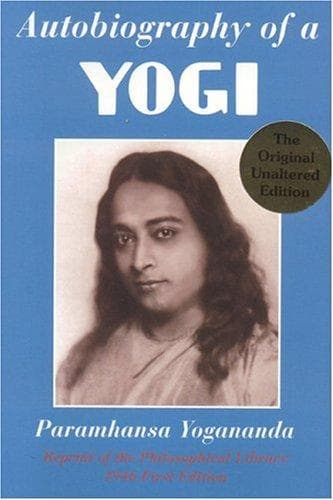
Yogananda, Paramahansa, 1893-1952; Yogis -- India -- Biography
Nothing but one or two small pamphlets in English has been written
on the guru’s life. One biography in Bengali, SRI SRI {FN32-6}
SHYAMA CHARAN LAHIRI MAHASAYA, appeared in 1941. It was written
by my disciple, Swami Satyananda, who for many years has been the
ACHARYA (spiritual preceptor) at our VIDYALAYA in Ranchi. I have
translated a few passages from his book and have incorporated them
into this section devoted to Lahiri Mahasaya.
It was into a pious Brahmin family of ancient lineage that Lahiri
Mahasaya was born September 30, 1828. His birthplace was the village
of Ghurni in the Nadia district near Krishnagar, Bengal. He was the
youngest son of Muktakashi, the second wife of the esteemed Gaur
Mohan Lahiri. (His first wife, after the birth of three sons, had
died during a pilgrimage.) The boy’s mother passed away during
his childhood; little about her is known except the revealing fact
that she was an ardent devotee of Lord Shiva, {FN32-7} scripturally
designated as the “King of Yogis.”
The boy Lahiri, whose given name was Shyama Charan, spent his early
years in the ancestral home at Nadia. At the age of three or four
he was often observed sitting under the sands in the posture of a
yogi, his body completely hidden except for the head.
The Lahiri estate was destroyed in the winter of 1833, when
the nearby Jalangi River changed its course and disappeared into
the depths of the Ganges. One of the Shiva temples founded by the
Lahiris went into the river along with the family home. A devotee
rescued the stone image of Lord Shiva from the swirling waters and
placed it in a new temple, now well-known as the Ghurni Shiva Site.
Gaur Mohan Lahiri and his family left Nadia and became residents
of Benares, where the father immediately erected a Shiva temple. He
conducted his household along the lines of Vedic discipline, with
regular observance of ceremonial worship, acts of charity, and
scriptural study. Just and open-minded, however, he did not ignore
the beneficial current of modern ideas.
The boy Lahiri took lessons in Hindi and Urdu in Benares study-groups.
He attended a school conducted by Joy Narayan Ghosal, receiving
instruction in Sanskrit, Bengali, French, and English. Applying
himself to a close study of the VEDAS, the young yogi listened
eagerly to scriptural discussions by learned Brahmins, including
a Marhatta pundit named Nag-Bhatta.
Shyama Charan was a kind, gentle, and courageous youth, beloved by
all his companions. With a well-proportioned, bright, and powerful
body, he excelled in swimming and in many skillful activities.
In 1846 Shyama Charan Lahiri was married to Srimati Kashi Moni,
daughter of Sri Debnarayan Sanyal. A model Indian housewife, Kashi
Moni cheerfully carried on her home duties and the traditional
householder’s obligation to serve guests and the poor. Two saintly
sons, Tincouri and Ducouri, blessed the union.
Public-domain text, read in full here on John Shaqi.
Reviews
Reviews
No reviews yet
Be the first to share your thoughts on this work.
Elsewhere in the archive
Join the Discussion
Join the discussion
Sign in to leave a comment or review.
Sign InorCreate an account