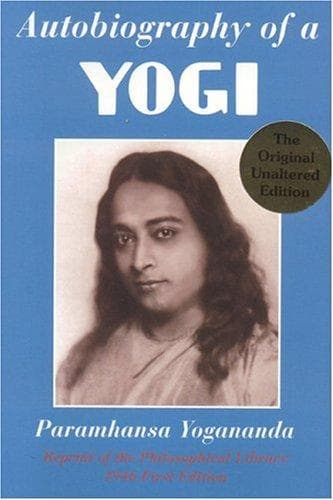
Yogananda, Paramahansa, 1893-1952; Yogis -- India -- Biography
At the age of 23, in 1851, Lahiri Mahasaya took the post of accountant
in the Military Engineering Department of the English government.
He received many promotions during the time of his service. Thus
not only was he a master before God’s eyes, but also a success in
the little human drama where he played his given role as an office
worker in the world.
As the offices of the Army Department were shifted, Lahiri Mahasaya
was transferred to Gazipur, Mirjapur, Danapur, Naini Tal, Benares,
and other localities. After the death of his father, Lahiri had to
assume the entire responsibility of his family, for whom he bought
a quiet residence in the Garudeswar Mohulla neighborhood of Benares.
It was in his thirty-third year that Lahiri Mahasaya saw fulfillment
of the purpose for which he had been reincarnated on earth.
The ash-hidden flame, long smouldering, received its opportunity
to burst into flame. A divine decree, resting beyond the gaze of
human beings, works mysteriously to bring all things into outer
manifestation at the proper time. He met his great guru, Babaji,
near Ranikhet, and was initiated by him into KRIYA YOGA.
This auspicious event did not happen to him alone; it was a
fortunate moment for all the human race, many of whom were later
privileged to receive the soul-awakening gift of KRIYA. The lost,
or long-vanished, highest art of yoga was again being brought
to light. Many spiritually thirsty men and women eventually found
their way to the cool waters of KRIYA YOGA. Just as in the Hindu
legend, where Mother Ganges offers her divine draught to the parched
devotee Bhagirath, so the celestial flood of KRIYA rolled from the
secret fastnesses of the Himalayas into the dusty haunts of men.
{FN32-1} JOHN 11:1-4.
{FN32-2} A cholera victim is often rational and fully conscious
right up to the moment of death.
{FN32-3} The god of death.
{FN32-4} Literally, “Supreme soul.”
{FN32-5} GENESIS 18:23-32.
{FN32-6} SRI, a prefix meaning “holy,” is attached (generally twice
or thrice) to names of great Indian teachers.
{FN32-7} One of the trinity of Godhead-Brahma, Vishnu, Shiva-whose
universal work is, respectively, that of creation, preservation,
and dissolution-restoration. Shiva (sometimes spelled Siva),
represented in mythology as the Lord of Renunciates, appears in
visions to His devotees under various aspects, such as Mahadeva,
the matted-haired Ascetic, and Nataraja, the Cosmic Dancer.
CHAPTER: 33
BABAJI, THE YOGI-CHRIST OF MODERN INDIA
The northern Himalayan crags near Badrinarayan are still blessed by
the living presence of Babaji, guru of Lahiri Mahasaya. The secluded
master has retained his physical form for centuries, perhaps for
millenniums. The deathless Babaji is an AVATARA. This Sanskrit word
means “descent”; its roots are AVA, “down,” and TRI, “to pass.”
In the Hindu scriptures, AVATARA signifies the descent of Divinity
into flesh.
Public-domain text, read in full here on John Shaqi.
Reviews
Reviews
No reviews yet
Be the first to share your thoughts on this work.
Elsewhere in the archive
Join the Discussion
Join the discussion
Sign in to leave a comment or review.
Sign InorCreate an account