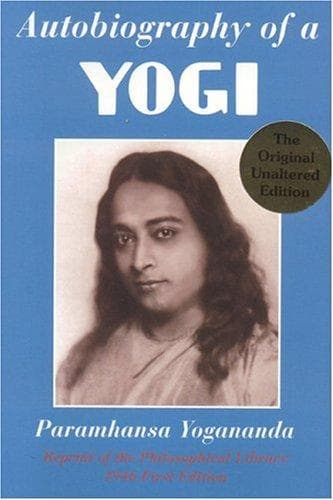
Yogananda, Paramahansa, 1893-1952; Yogis -- India -- Biography
{FN35-11} MATTHEW 27:46-49.
{FN35-12} “How many sorts of death are in our bodies! Nothing is
therein but death.”-MARTIN LUTHER, IN “TABLE-TALK.”
{FN35-13} The chief prayer of the Mohammedans, usually repeated
four or five times daily.
{FN35-14} “Seek truth in meditation, not in moldy books. Look in
the sky to find the moon, not in the pond.”-PERSIAN PROVERB.
{FN35-15} As KRIYA YOGA is capable of many subdivisions, Lahiri
Mahasaya wisely sifted out four steps which he discerned to be
those which contained the essential marrow, and which were of the
highest value in actual practice.
{FN35-16} Other titles bestowed on Lahiri Mahasaya by his disciples
were YOGIBAR (greatest of yogis), YOGIRAJ (king of yogis), and MUNIBAR
(greatest of saints), to which I have added YOGAVATAR (incarnation
of yoga).
{FN35-17} He had given, altogether, thirty-five years of service
in one department of the government.
{FN35-18} Vast herbal knowledge is found in ancient Sanskrit treatises.
Himalayan herbs were employed in a rejuvenation treatment which
aroused the attention of the world in 1938 when the method was
used on Pundit Madan Mohan Malaviya, 77-year-old Vice-Chancellor
of Benares Hindu University. To a remarkable extent, the noted
scholar regained in 45 days his health, strength, memory, normal
eyesight; indications of a third set of teeth appeared, while all
wrinkles vanished. The herbal treatment, known as KAYA KALPA, is
one of 80 rejuvenation methods outlined in Hindu AYURVEDA or medical
science. Pundit Malaviya underwent the treatment at the hands of
Sri Kalpacharya Swami Beshundasji, who claims 1766 as his birth
year. He possesses documents proving him to be more than 100 years
old; ASSOCIATED PRESS reporters remarked that he looked about 40.
Ancient Hindu treatises divided medical science into 8 branches:
SALYA (surgery); SALAKYA (diseases above the neck); KAYACHIKITSA
(medicine proper); BHUTAVIDYA (mental diseases); KAUMARA (care
of infancy); AGADA (toxicology); RASAYANA (longevity); VAGIKARANA
(tonics). Vedic physicians used delicate surgical instruments,
employed plastic surgery, understood medical methods to counteract
the effects of poison gas, performed Caesarean sections and brain
operations, were skilled in dynamization of drugs. Hippocrates,
famous physician of the 5th century B.C., borrowed much of his
materia medica from Hindu sources.
{FN35-19} The East Indian margosa tree. Its medicinal values have
now become recognized in the West, where the bitter NEEM bark is
used as a tonic, and the oil from seeds and fruit has been found
of utmost worth in the treatment of leprosy and other diseases.
Public-domain text, read in full here on John Shaqi.
Reviews
Reviews
No reviews yet
Be the first to share your thoughts on this work.
Elsewhere in the archive
Join the Discussion
Join the discussion
Sign in to leave a comment or review.
Sign InorCreate an account